
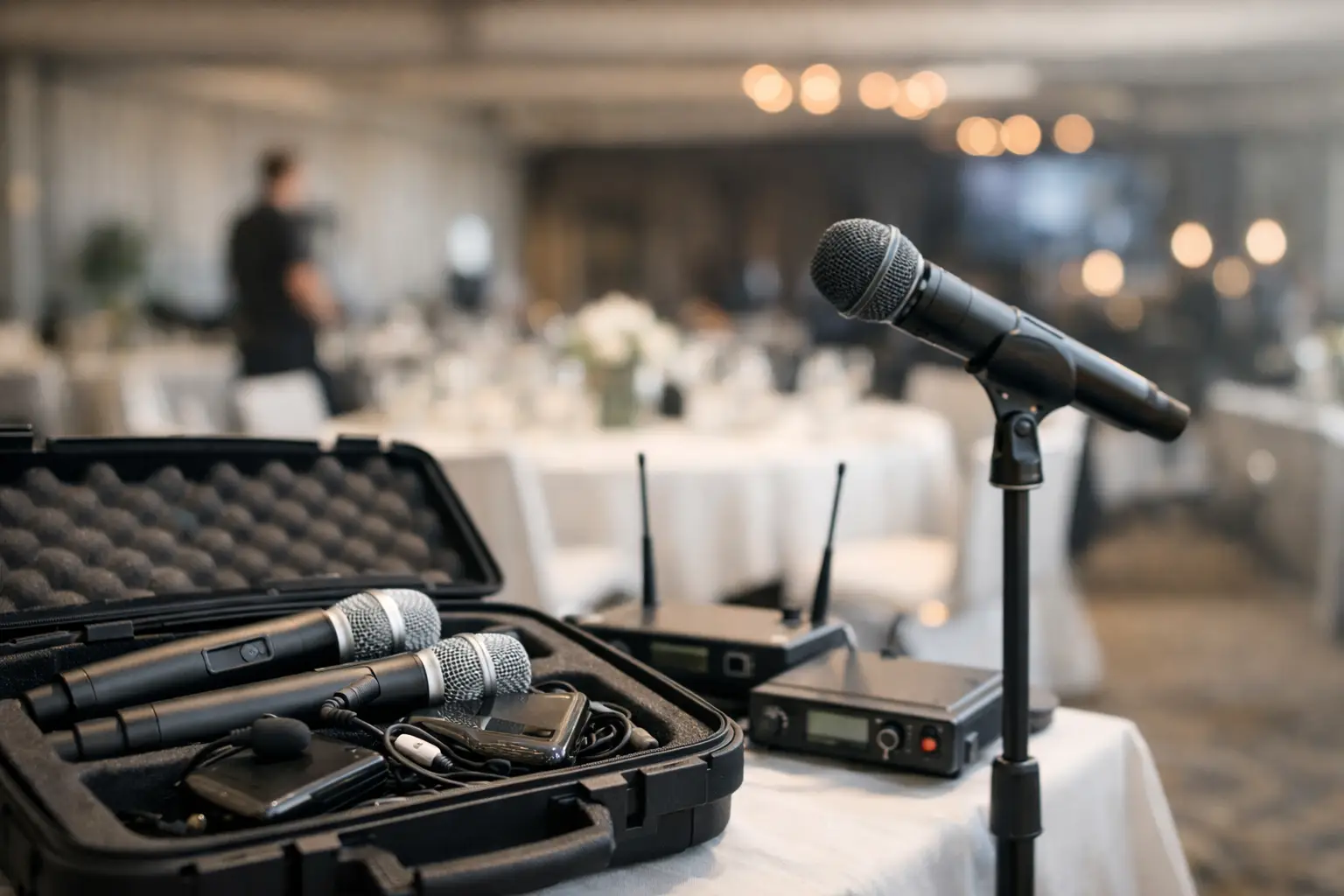
A beautiful venue can still feel unpolished when guests cannot hear the welcome speech, a panellist fades in and out, or a presenter is tied to one spot behind a lectern. Wireless microphone hire for events is not simply about adding a microphone to the run sheet. It is about giving every key moment the clarity, confidence and professional finish it deserves.
For a wedding in a garden, that may mean clear vows despite open-air conditions. For a conference, it may mean allowing speakers to move naturally across a stage. For a gala, it may mean ensuring the MC holds the room from the first welcome to the final thank you. The right system depends on the event, the venue and who needs to be heard.
Start with the moments that need to be heard
Before choosing microphone types, map the programme. Consider the ceremony, speeches, panel sessions, announcements, awards, performances and audience questions. A microphone plan based only on guest numbers often misses the point. The real question is how many people may need to speak at the same time, and where they will be standing when they do.
A cocktail-style birthday with one short toast may only need a single handheld wireless microphone and speaker support. A formal wedding reception may need one microphone for the MC, another for speeches, and a practical arrangement for a musician or celebrant earlier in the day. A corporate conference with a moderator and three panellists needs a different approach again, particularly if presenters will move between a stage, lectern and audience.
It also pays to allow for unscripted moments. Award recipients may be called up unexpectedly. A CEO may want to take audience questions. A best man may wander away from the speaker position while telling a story. A well-planned system accommodates the way people actually speak, rather than requiring them to perform around the equipment.
Choosing the right wireless microphone
The microphone style should suit the speaker and the setting. Handheld wireless microphones are a dependable choice for speeches, roving Q&A, MC duties and award presentations. They are intuitive to use, easy to pass between speakers and suitable for occasions where different people take the stage throughout the event.
A lapel microphone, also known as a lavalier, is discreet and useful when a presenter needs both hands free. It suits wedding celebrants, keynote speakers and hosts who need to move around a stage. It does, however, need careful placement. Clothing movement, jewellery and fabric can create noise if the microphone is not fitted properly.
Headset microphones are often the better option for active presenters, fitness instructors, performers or speakers who move constantly. Because the microphone remains close to the mouth, it can provide more consistent volume than a lapel microphone. The trade-off is visibility. For some formal events, a headset may not suit the desired look.
For a seated panel, individual handheld microphones are often the clearest and most controlled option. Shared table microphones can appear neat, but they may not capture quieter speakers well, particularly when panellists turn their heads or speak over one another. The right choice comes down to the format, the room and the standard expected of the production.
Wireless microphone hire for events needs the right audio system
A quality wireless microphone cannot compensate for speakers that are too small, poorly positioned or missing altogether. Audio should be planned as one system: microphones, receivers, mixing, speakers, power and the people operating it.
In a small indoor room, one or two speakers may provide comfortable, even sound. In a long marquee, large hall or outdoor space, sound may need to be distributed across several points so guests at the back are not straining to hear while guests at the front are overwhelmed. This is especially relevant for seated dinners, where table settings, florals and guest conversation naturally absorb and compete with speech audio.
Outdoor events introduce their own variables. Wind, traffic, nearby functions and open space can all affect intelligibility. A microphone may work perfectly during a quiet soundcheck and struggle once 150 guests arrive, music begins and the bar starts operating. Planning for the actual event conditions, rather than an empty venue, makes a material difference.
Wireless systems also require reliable radio frequency coordination. Multiple microphones, nearby venues and built-up city areas can create interference risks if equipment is not selected and configured correctly. This is one reason professional equipment and experienced setup matter. The goal is not just sound that works at arrival, but dependable audio throughout the programme.
Plan coverage before guests arrive
The range of a wireless microphone is not unlimited, and it is affected by walls, metal structures, staging, crowds and distance from the receiver. A presenter walking through a ballroom has different requirements from a host speaking at the front of a backyard marquee.
During planning, identify where the receiver equipment will sit, where speakers will move and whether there are any areas they should avoid. If a presenter needs to enter from backstage, walk through the audience and speak from a stage, the system should be tested across that path. This small detail prevents a common issue: a microphone that sounds clear at the lectern but drops out at the most important moment.
Battery management matters too. Professional wireless microphone hire should include charged batteries or fresh replacements appropriate to the event duration, with a clear process for changing them if needed. Long conferences, all-day weddings and multi-session productions should never rely on a last-minute battery check.
Give soundcheck the time it deserves
A proper soundcheck is more than switching on a microphone. Each speaker should test at a realistic speaking volume, from the position they will use during the event. The technician or event team can then set levels that are clear without feedback, distortion or sudden volume jumps when a confident speaker takes the microphone.
For weddings and private celebrations, nominate one person who knows the run sheet and can coordinate speakers before formalities begin. They should know where microphones are kept, how they are passed on and who is next. For corporate events, brief presenters to keep handheld microphones close to their mouth and avoid covering the microphone head with their hand.
If music, video playback or a band is involved, test these elements together. Speech audio may need different settings from background music, and a video with poor sound can undermine an otherwise polished presentation. A short, organised technical rehearsal is far less disruptive than troubleshooting in front of guests.
Delivery, installation and collection should be part of the plan
Audio hire is often treated as a small add-on, but it has a direct impact on timing, presentation and guest experience. Consider who will deliver the equipment, where it will be placed, how cables will be managed, when the system can be tested and who is responsible once the event begins.
For an important occasion, collection from a warehouse and self-installation may save on initial cost, but it also places technical responsibility on the host or event team. That can be suitable for a simple backyard speech with an experienced operator. It is less suitable when the event includes a formal programme, a large guest list, multiple speakers or a strict venue schedule.
A managed hire arrangement removes much of that pressure. At Zero Three Party Hire, audio equipment can be coordinated alongside furniture, staging, lighting, marquees and other event infrastructure, helping reduce supplier overlap and site-day confusion. Clean, presentation-ready equipment, organised delivery windows and professional setup give hosts more time to focus on guests rather than receiver settings and spare batteries.
Questions to confirm before you lock it in
Ask your supplier whether the proposed microphones match the number of speakers and the event format. Confirm whether speakers, mixing equipment, stands, delivery, installation, an operator and pack-down are included. Check the access conditions too, particularly for rooftops, regional properties, marquees, heritage venues and sites with limited bump-in times.
It is also worth confirming what happens if the programme changes. Events rarely run exactly as planned. A flexible audio setup makes it easier to add a last-minute speaker, move a panel position or take questions from the floor without compromising the experience.
Clear sound is one of those details guests may not consciously notice when it is done well. They simply stay engaged, laugh at the right moment and hear every word that matters. Plan it early, test it properly and give your event the calm, professional finish it deserves.