
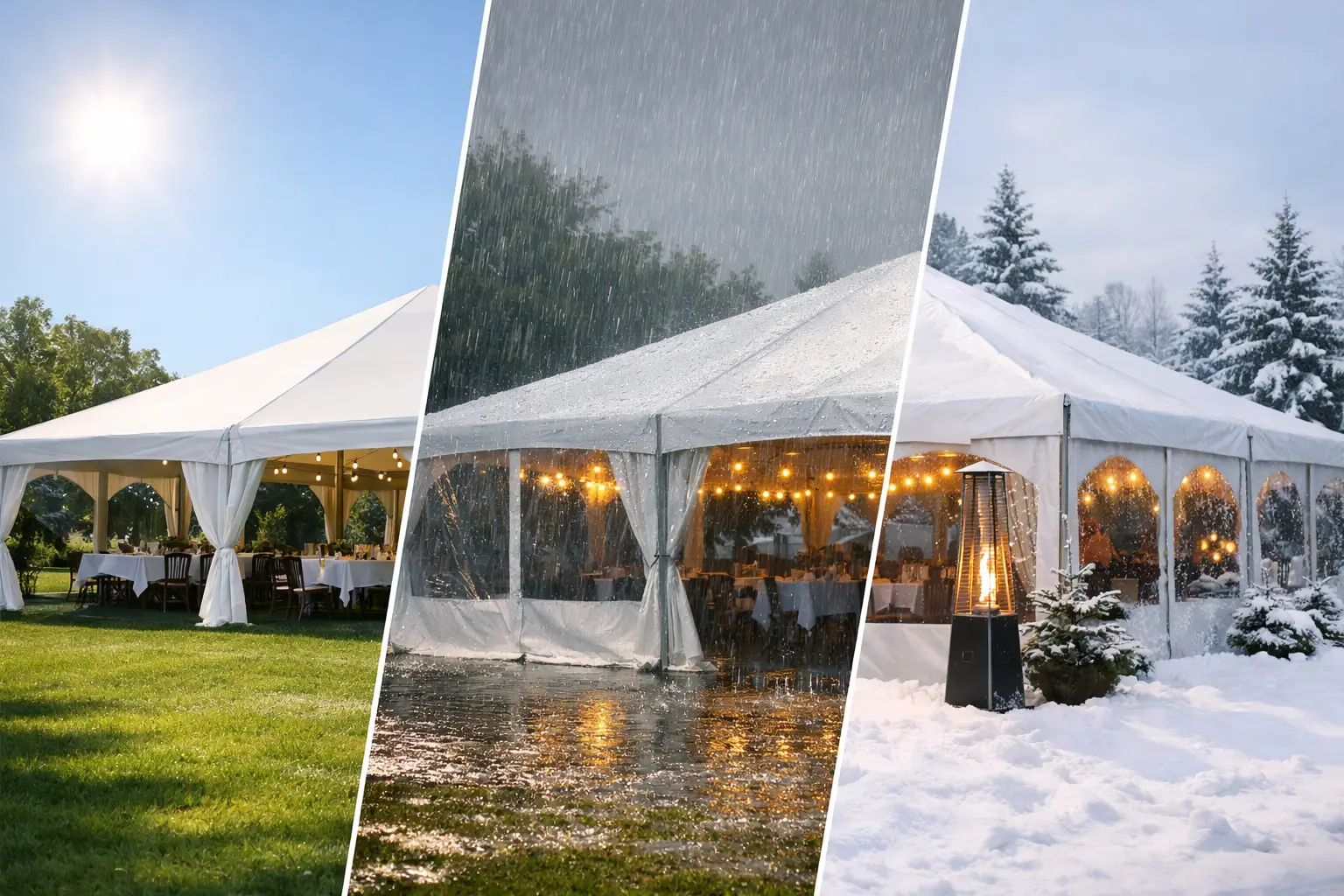
A wet lawn, a sudden southerly or harsh afternoon sun can change an event site quickly. All weather event tent hire gives you a controlled, guest-ready space, but the result depends on more than putting a roof over the party. The structure, site conditions, access, anchoring, flooring and layout all need to work together before the first chair is placed.
For a backyard wedding, corporate lunch, gala or major production, the right tent or marquee protects the atmosphere you have planned as well as the people attending. It keeps dining areas usable, bar service moving, furniture presentation-ready and suppliers working to schedule when the forecast is less than perfect.
What all weather event tent hire should include
An all-weather setup starts with a commercial-grade event structure sized for both your guest numbers and the way the event will run. Guests need room to arrive, mingle, dine and move between key areas without crowding entrances or sitting beside exposed edges. A tent that technically fits the tables can still feel cramped if it has not allowed for a bar, buffet, dance floor, stage, AV position or catering access.
Weather protection is built in layers. A quality roof provides shade and rain cover, while sidewalls can be added or adjusted to manage wind and sideways rain. Clear walls preserve views and natural light, whereas solid walls offer more privacy and can create a more enclosed feel. The best option depends on the site, season, event timing and whether nearby views are part of the occasion.
Flooring is often the difference between a tent that merely provides shelter and one that feels like a proper event venue. On grass, a suitable floor can help manage uneven ground, protect footwear and give tables, chairs and dance floors a stable base. It also creates a cleaner finish for formal occasions. For some casual backyard gatherings, flooring may not be necessary across the entire tent, but it is worth considering for dining, service and high-traffic areas.
Rain is only one part of the weather plan
Rain is usually the first concern, but wind and heat deserve the same level of planning. A marquee can provide excellent shelter in poor conditions when it is correctly installed and secured for the site. It is not, however, a substitute for ignoring severe-weather procedures. Safe operation may require sidewalls to be opened, closed or removed, depending on conditions and the structure design.
Wind load, ground type and access all affect the installation method. Grass, soil, concrete, paving and asphalt each call for different fixing solutions. A professional site assessment identifies whether stakes, weighted ballast or another approved system is appropriate. This is not a detail to leave until delivery day, especially if there are underground services, irrigation, pavers or restricted access to consider.
Heat can be just as disruptive as rain at an Australian event. A tent reduces direct sun, but enclosed spaces can still become warm. Ventilation, open sides, fans, suitable spacing between tables and a practical bar layout all help guests stay comfortable. For daytime events, orienting the structure to manage the path of the sun can also make a noticeable difference.
Sidewalls need a purpose
More walls do not automatically mean better protection. Fully enclosing a structure can be useful for a winter dinner, but it may limit airflow on a warm day. Partial sidewalls can block a prevailing breeze while leaving other areas open. Clear walls are a strong option when a garden, waterfront or city backdrop is central to the styling, though they can need additional temperature management in direct sun.
A flexible sidewall plan gives the event team options. The aim is to protect the guest experience without making the space feel closed in.
Choose a structure around the event, not just guest numbers
Guest count is the starting point, not the final answer. A 100-person cocktail event usually needs a different footprint from a 100-person seated dinner. Add a band, formal stage, lounge area, gift table, catering prep space or dance floor and the required area changes again.
A clear brief helps your hire partner recommend the right configuration. Share the guest count, event format, address, access details, event times and any existing site features. Photos and a simple site plan are particularly useful for private homes, regional properties and temporary production sites.
It also helps to identify where guests will arrive and where suppliers need to unload. A polished tent interior loses impact if guests must walk through mud to reach it, or if caterers have to carry equipment across a long, uneven lawn. Entry matting, pathways, lighting and a covered connection to the house or venue can turn a workable plan into a considered one.
Build a complete event environment
The tent is the structure that holds the event together, but the hire plan should account for what happens underneath it. Tables and chairs need to suit the occasion, with enough clearance for service and guest movement. Lighting should support the mood after sunset while allowing people to read menus, find the bar and walk safely around the site.
For weddings and formal functions, chandeliers, festoon lighting or architectural uplighting can shape the room without overpowering the styling. Corporate events may need a more practical lighting plan, along with AV equipment, staging, lecterns and screens. For both, cable management matters. Cables should be planned around walkways and service routes, not added as an afterthought.
Catering requirements should be confirmed early. A drinks station, coffee service or catering tent may need its own covered area, refrigeration access and power plan. Separating food preparation from guest dining keeps the main space calm and presentation-focused while giving caterers room to work efficiently.
The details that avoid delivery-day surprises
The strongest event plans deal with practical questions before equipment is loaded. Confirm the delivery window, bump-in access, gate widths, stairs, vehicle clearance and whether a ute or truck can reach the installation area. If the site has limited access, equipment may need to be carried further, which can affect crew requirements and setup time.
You should also check local venue conditions, council requirements and any restrictions on staking into the ground. Some locations require permits, specific safety documentation or approved installation methods. Larger events may need additional planning for emergency access, power distribution and overnight security.
When comparing all weather event tent hire quotes, look beyond the headline structure price. Ask what is included in delivery, installation, pack-down and collection; whether sidewalls, flooring, weights and lighting are itemised; and who is responsible for coordinating the setup around other suppliers. Clear inclusions protect your budget and reduce last-minute decisions.
A managed hire process keeps the pressure off
The value of professional hire is not simply access to better equipment. It is having a team that can translate your event brief into a workable site plan, coordinate the moving parts and install the finished space safely and neatly.
At Zero Three Party Hire, a dedicated event consultant can work through tent sizing, furniture, flooring, lighting and logistics in one coordinated quote. The crew delivers, installs, briefs you on the completed setup and returns for pack-down and collection, so you are not arranging separate transport or trying to build an event space yourself.
For larger events, early confirmation is particularly valuable. Popular dates and peak wedding periods can limit structure availability, while complex sites need enough lead time for planning. Locking in the key infrastructure early gives you confidence to finalise styling, catering and guest communications around a confirmed layout.
Plan for comfort, then let the event take over
A good weather plan should be almost invisible to guests. They should notice the beautiful table setting, the lighting at dusk and the ease of moving from drinks to dinner, not the contingency work behind it.
Start with the site and the event flow, then select all weather protection that suits the forecast, guest experience and safety requirements. With the right tent, considered flooring and a properly managed installation, an outdoor occasion can still feel composed when the weather has other ideas. Get a detailed quote early, confirm the practical inclusions, and give your guests a space that feels ready for whatever the day brings.
One Comment
[…] Pay particular attention to the cancellation and postponement clause. You want practical answers to a few questions: Is the deposit refundable, partly refundable or transferable? What happens if you move the date? Is there a deadline for notifying the supplier? Are delivery, labour or custom-order costs treated separately? What happens if bad weather affects an outdoor event? […]