
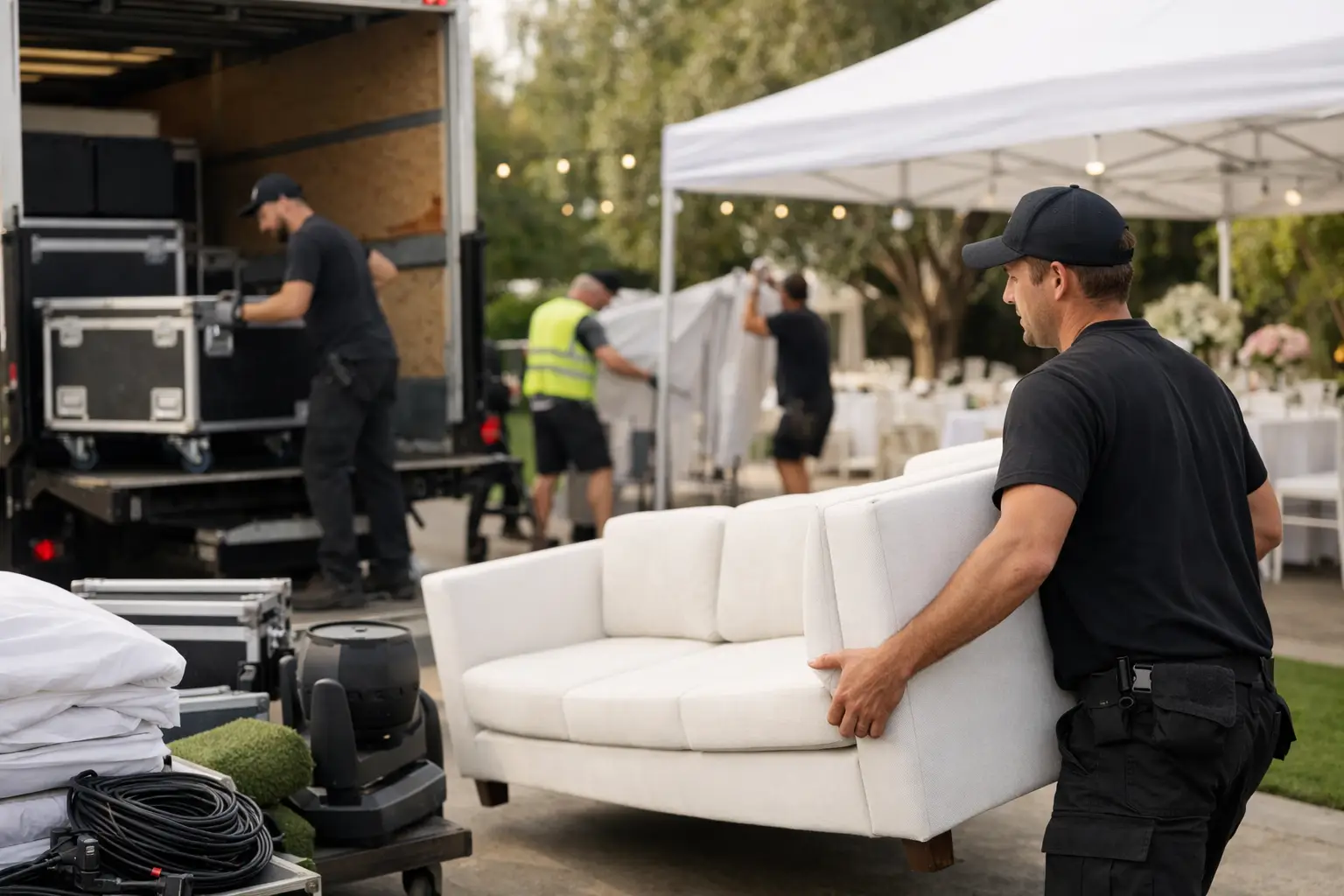
A marquee arriving on time is only the beginning. For an event to feel polished, every table needs to be placed with purpose, every chair needs to be clean and stable, and every lighting, AV and furniture detail needs to be ready before the first guest arrives. Professional event delivery and installation turns hired equipment into a complete, guest-ready setting – without leaving the host, venue team or event planner to solve logistics on the day.
For a backyard wedding, that may mean transforming an open lawn into a weather-ready reception space. For a corporate gala, it can mean coordinating a precise loading dock window, a detailed floor plan and technical equipment that works from the first microphone check. The scale changes, but the need for accountable delivery does not.
Why event delivery and installation deserves planning
Hiring quality equipment matters, but the way it reaches the site and is installed has a direct effect on the event experience. A premium dining setting loses its impact if tables arrive late, furniture is placed hastily or packaging is left behind. More seriously, poor planning can create avoidable access issues, safety concerns and last-minute stress for everyone involved.
A managed service brings the right people, vehicles, equipment and sequence to the job. The crew can install the larger infrastructure first, then position furniture, tableware, lighting and finishing pieces around it. At pack-down, the process is reversed carefully and efficiently, so the site is left in order.
This is particularly valuable when there are multiple moving parts. A wedding may involve a ceremony setup, cocktail furniture, a reception marquee, a dance floor and catering equipment. A product launch may need staging, lounge settings, AV, branding structures and a tightly controlled bump-in. One coordinated supplier reduces the chance of conflicting delivery times or an essential item being overlooked.
Start with the site, not the hire list
The best delivery plans begin with a clear understanding of the location. Before finalising a quote, consider vehicle access, loading areas, stairs, lifts, pathways, gates, ground conditions and the distance from the unloading point to the setup area.
A suburban home may have a narrow side gate, soft lawn or a steep driveway. A CBD venue may have a fixed loading-dock booking, height restrictions and strict bump-in rules. Regional properties can involve long access roads, uneven ground or limited power. None of these issues make an event impossible, but they should shape the delivery plan from the outset.
Guest numbers are just as important. They determine not only how many chairs, tables and place settings are required, but also the circulation space around them. A room can technically fit extra furniture and still feel crowded. Experienced event planning considers service paths, access to the bar, room for catering staff, emergency exits and a comfortable flow between key areas.
If you are planning a marquee event, allow for the footprint of the structure as well as entry points, anchoring requirements and wet-weather access. For larger installations, a site visit or detailed site photographs can prevent surprises. It is far easier to adjust a layout before delivery than to redesign it while guests are on their way.
A clear quote prevents day-of confusion
The phrase “delivery included” can mean different things between suppliers. It may only cover a kerbside drop-off, or it may include a crew carrying items to the event area, installing them, briefing the client and returning for collection. Confirm exactly what is included before you lock in your date.
A useful itemised quote should make the scope clear: the hire items, quantities, delivery timing, installation requirements, collection arrangements and any access-related charges. If the event requires stairs, difficult access, after-hours work, waiting time or a specific vehicle booking, those details should be addressed early.
This is where a dedicated event consultant makes a practical difference. Rather than repeating your plans to different departments, you have one contact who understands the setup, schedule and approved inclusions. At Zero Three Party Hire, that means clients can make decisions with confidence: what you approve is what you pay, with the operational details planned before the crew arrives.
For private hosts, a consultant can also help turn a broad idea into a workable order. You might know you want a long-table dinner for 80, but not whether the backyard needs a marquee, what lighting will suit the evening or how much lounge seating makes sense. For planners, the same support provides an extra set of experienced eyes on timings, access and presentation standards.
How a professional installation should run
A well-managed setup follows a logical sequence, but it also leaves room for the realities of live events. Weather, venue access and other suppliers can all affect the final run sheet.
Before the crew arrives
The event details should be confirmed in writing: delivery address, site contact, access instructions, arrival window, setup plan and collection time. The site contact needs to be reachable by mobile and authorised to make practical decisions if required.
It helps to clear the intended installation area before bump-in. Move vehicles from access routes, secure pets, unlock gates and let the supplier know about any site changes. If a venue requires induction, certificates or loading-dock paperwork, provide these well before the delivery date.
During delivery and setup
Professional crews arrive with clean, maintained stock and a clear brief. Larger items such as marquees, staging, dance floors and event structures are generally installed first. Furniture follows, then tableware, lighting and other details that depend on the final layout.
The goal is not simply to unload quickly. It is to leave the setting neat, stable and ready for the next supplier or styling team. Uniformed crew members, careful handling and placement to the approved plan protect both the equipment and the quality of the finished event.
Timing matters. A morning installation can be ideal for a private afternoon celebration, while a venue may require a narrow early-morning or overnight window. For corporate events, setup may need to happen around rehearsals, registration builds or security access. The right approach depends on the site, but the schedule should always include enough time for checks before guests enter.
Handover and event readiness
Before the crew leaves, inspect the setup with the site contact. Check quantities, placement and the condition of key items. If lighting or AV is part of the hire, confirm that it has been installed as agreed and that the responsible event contact understands any basic operating requirements.
This handover is especially useful at larger events. It gives organisers a clear point to identify a missing chair, a layout adjustment or an access issue while the crew is still onsite. Small changes are often straightforward at this stage; major changes may depend on stock availability, labour and timing.
Pack-down is part of the service, not an afterthought
After a successful event, hosts should be able to focus on guests, suppliers and closing the venue – not lifting furniture into a ute at midnight. Planned pack-down and collection protect the site, reduce risk and make the end of the event far less demanding.
Collection timing should suit the venue’s requirements and the hired items. Some events need an immediate late-night pack-down, particularly where a venue has another booking the next day. Others are better collected the following morning, provided the site is secure and the venue has approved the arrangement.
Before collection, remove personal items, florals, signage and rubbish from hired furniture and equipment. Stack or return smaller items only as instructed. Do not attempt to dismantle marquees, stages, dance floors or technical equipment unless that has been specifically arranged. A professional crew should manage those components safely.
When a simple drop-off may be enough
Not every event needs a full installation. If you are hiring a small number of chairs or cocktail tables for an easy-access home gathering, a delivery-only option may suit your budget and timing. The trade-off is that you take responsibility for placement, protection of the items and readiness for collection.
Full installation becomes the stronger choice when the event includes larger equipment, formal presentation standards, time-sensitive access, technical items or a site with difficult logistics. It is also worth considering when you want to host rather than manage suppliers. The cost is not only about labour; it is about reducing the risk of a rushed, incomplete or poorly presented setup.
The strongest events rarely look complicated to guests. They simply feel considered: clear pathways, comfortable seating, flattering light, stable structures and a space that works as well at the end of the night as it did at the start. Build that calm into your event delivery plan early, and you can spend the day where you belong – with your guests, not directing traffic at the gate.
4 Comments
[…] its practical level, this includes equipment selection, itemised quoting, delivery scheduling, vehicle access, installation, styling order, technical testing, on-site briefing, pack-down and […]
[…] presentation are non-negotiable, Zero Three Party Hire can coordinate premium hire equipment with delivery, installation, briefing, pack-down and collection. A dedicated consultant gives your team one practical point of […]
[…] delivery. A generator may need to arrive before the marquee build, remain active during styling and catering set-up, run through the event, then support pack-down after guests leave. That operating window determines […]
[…] the site early, ideally with your event supplier, and look for changes in level, drainage points, garden edges, tree roots, irrigation, vehicle […]