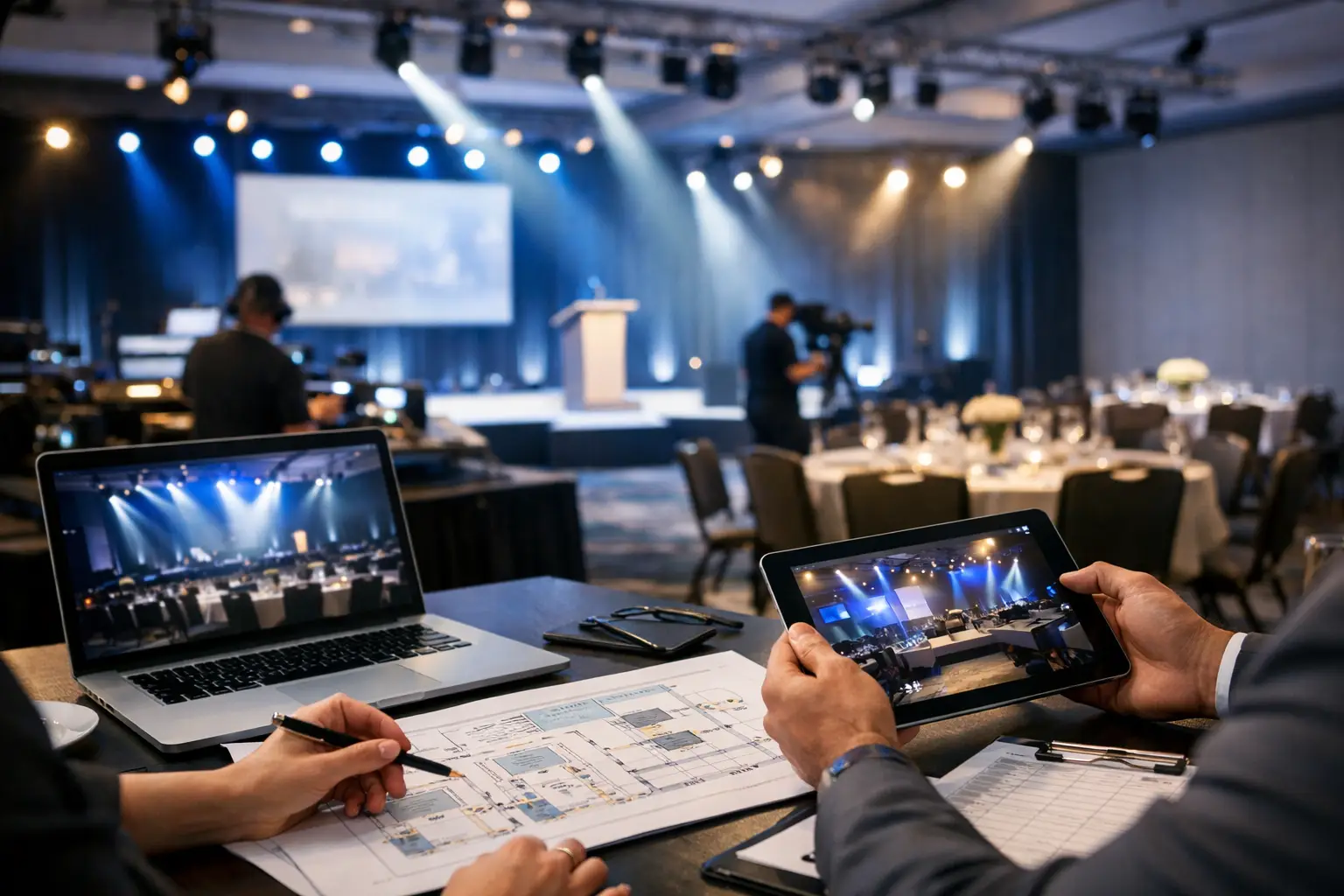
A corporate event can look effortless to guests while relying on hundreds of decisions behind the scenes: where the registration queue forms, when the screen is tested, how furniture arrives through a loading dock, and who has authority to approve a last-minute change. This corporate event production planning guide focuses on the work that protects the guest experience, your budget and your run sheet.
The goal is not to add more meetings or paperwork. It is to create one clear production plan that every supplier, venue contact and internal stakeholder can work from. When the details are confirmed early, event day becomes controlled rather than reactive.
Start with the event brief, not the equipment list
Tables, chairs, staging, lighting and audio-visual equipment should support a defined outcome. Before requesting quotes, establish the event purpose, audience, guest numbers, format, venue and non-negotiables. A product launch has different production priorities from an awards dinner, staff conference or brand activation.
Be specific about what success looks like. It may be clear presentations for 300 delegates, a formal gala that feels premium on arrival, a networking event with enough seating to keep people comfortable, or a safe outdoor function that can continue if the weather changes. Those priorities determine where to invest.
Your initial brief should also identify decision-makers. One person needs final approval on scope, spend and event-day changes. Without that clarity, small questions can delay production bookings and create avoidable variation costs.
Build a realistic budget with contingency
Production budgets are often strained because the first estimate covers the visible elements but not the operational work around them. Include delivery, installation, crew, access equipment, power distribution, permits, venue charges, security, cleaning, transport restrictions and pack-down. For outdoor or temporary sites, allow for flooring, weather protection, fencing, amenities and lighting for safe access after dark.
A contingency is not a sign of poor planning. It is protection for genuine unknowns, particularly when the venue is untested, the schedule is tight or the event relies on temporary infrastructure. The right amount depends on complexity, but it should be agreed before suppliers are confirmed rather than found after a change is required.
Ask for itemised quoting. You should be able to see what is supplied, what labour is included, when delivery occurs and which assumptions sit behind the price. What you approve is what you pay only when the scope is clear.
Confirm the site before you lock in the layout
A floor plan is more than a room full of rectangles. It is a working map for guests, crew, catering and emergency access. Conduct a site visit with the venue and key production suppliers where possible, especially for large-scale, outdoor or first-time events.
Measure usable space rather than relying on a venue capacity figure. Capacity can change significantly once you allow for a stage, screen, bar, dance floor, catering stations, registration, storage, accessible pathways and fire exits. A room that technically holds 400 may not comfortably host 400 guests in the format you have planned.
Check loading access in detail. Confirm vehicle height limits, dock booking times, lift dimensions, stairs, distances from the unload point and whether crew can use trolleys. A beautifully planned setup can lose hours if a truck cannot access the site or equipment must be hand-carried through a public foyer.
For a marquee event, inspect ground conditions, underground services, gradients, vehicle access and drainage. Temporary structures need a proper site assessment, not a quick estimate from photos. In regional locations, also allow extra time for freight, crew travel and local access conditions.
Plan the guest journey
Walk the event from the guest’s perspective. Consider where people park or arrive by rideshare, where they queue, how they find registration, where coats or bags go, and what they see first. Good production makes these transitions obvious without filling the space with signs.
Then consider the crew journey separately. Catering needs clear service routes. Technicians need access to control positions and cable paths. Speakers need a quiet holding area. Rubbish, empty glassware and replacement stock need to move without crossing the main guest experience. These routes rarely appear in a styling concept, but they are essential to a polished event.
Turn the brief into one production schedule
A run sheet tells people what happens during the event. A production schedule tells them how the event is built, tested and removed. You need both.
Work backwards from guest arrival. Set times for site access, bump-in, structure installation, furniture placement, staging, audio-visual setup, lighting focus, styling, catering setup, safety checks, rehearsals and final cleaning. Include realistic buffers between trades. The sound team cannot complete a full check while staging is still being built around them.
For conferences and presentations, schedule a technical rehearsal with speakers or their representatives. Confirm slide formats, microphones, playback audio, confidence monitors, clickers and video content. Ask presenters to submit final files by an agreed deadline. A polished keynote can be undermined by a missing adapter or an untested video with no sound.
Your production schedule should state who is responsible for each task, not simply the time it should happen. Use one current version and distribute it to all relevant parties. If timing changes, update the document rather than relying on calls and memory.
Choose suppliers who can own their part of the plan
The lowest equipment rate is not always the lowest event cost. Multiple suppliers can work well, particularly for specialised creative or technical elements, but each handover adds coordination risk. Consider where consolidating furniture, marquees, lighting, tables, tableware, dance floors and event structures will save time and reduce transport movements.
Look for suppliers that ask operational questions before confirming a quote. They should want to know about access, timings, venue rules, guest count, surface type, power, weather exposure and pack-down requirements. A supplier that only asks what colour chair you want may not be planning for the full job.
For corporate events where timing and presentation are non-negotiable, Zero Three Party Hire can coordinate premium hire equipment with delivery, installation, briefing, pack-down and collection. A dedicated consultant gives your team one practical point of contact as the plan develops.
Treat power, safety and weather as production items
Power is frequently underestimated. Calculate demand for lighting, sound, screens, catering equipment, refrigeration, charging stations and any activation equipment. Confirm existing circuits with the venue or arrange suitable temporary power. Keep cable runs protected and out of guest paths, with a clear plan for emergency access.
Safety requirements vary by venue, council and event type, so confirm them early. You may need public liability documentation, site inductions, traffic management, fire equipment, security, first aid, emergency procedures or engineering documentation for temporary structures. Do not leave compliance to the final week, when options are limited and costs rise.
For outdoor events, make a weather plan that is genuinely usable. Decide the trigger point for moving indoors, delaying a program or changing the layout. Identify who makes that call, at what time, and how guests, suppliers and staff will be informed. A marquee, weighted furniture, suitable flooring and protected electrical equipment can reduce exposure, but they do not replace a clear decision process.
Protect the live program
Once guests arrive, the event manager should not be chasing spare chairs or directing delivery vehicles. Assign an event-day lead with authority to manage the schedule, and give them the final contacts list, approved floor plan, supplier arrival times and escalation process.
Brief front-of-house staff on the program as well as hospitality. They need to know when doors open, when guests must be seated, where VIPs are directed and what happens if a session runs late. The technical operator, MC, catering lead and event manager should have direct communication throughout the event.
Keep a small operations kit on site: printed run sheets, floor plans, markers, tape, charging cables, basic first-aid supplies, spare signage materials and a list of venue contacts. It will not solve every issue, but it prevents small problems from becoming interruptions.
Finish with a clean handover
Pack-down is part of production planning, not an afterthought. Confirm when guests must leave, when suppliers can return, what remains on site overnight and who signs off with the venue. If the event includes hired tableware, furniture or technical equipment, make sure staff understand what must be retained for collection and where it will be placed.
After the event, record what worked while details are fresh. Note actual guest numbers, delivery constraints, program delays, popular layouts and equipment that was unnecessary or missing. That knowledge makes the next brief faster, more accurate and easier to deliver.
The best corporate events feel calm because the operational decisions were made before anyone walked through the door. Give the plan enough time, appoint clear owners and choose partners who take delivery, setup and collection as seriously as the finished room.