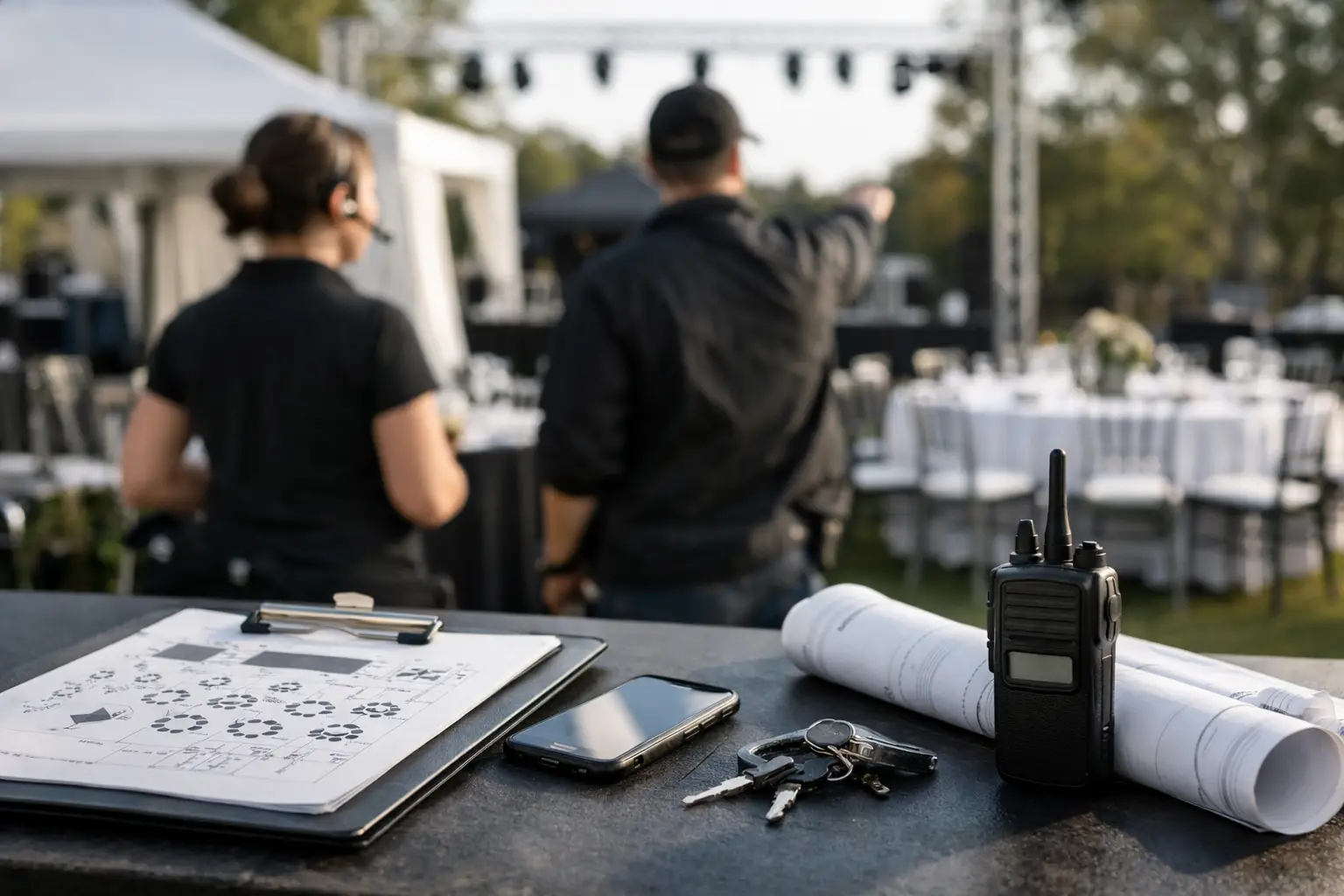
A great event can look effortless to guests while running on a precise operational plan behind the scenes. Event logistics is the work that makes that possible: getting the right equipment to the right place, in the right order, with enough time to install, inspect and present every detail properly.
For a backyard wedding, that may mean building a weather-ready marquee before furniture, lighting and table settings arrive. For a corporate gala, it can mean coordinating access windows, loading docks, AV checks and a venue handover that cannot move by five minutes. The scale changes, but the principle does not: the experience is only as strong as the plan supporting it.
What event logistics actually covers
Event logistics is more than delivery. It starts when guest numbers, site conditions and the event run sheet are still being confirmed, and it finishes only after pack-down and collection are complete. A well-managed process considers what is being hired, where each item goes, how the crew will access the site and what needs to happen before guests arrive.
At its practical level, this includes equipment selection, itemised quoting, delivery scheduling, vehicle access, installation, styling order, technical testing, on-site briefing, pack-down and collection. The details matter because each one affects another. A stage cannot be built where catering needs its service area. A dance floor needs a level, suitable surface. Festoon lighting needs a safe mounting plan and power source. Tables should be placed only after the marquee layout, entrances and circulation space are agreed.
For hosts, the goal is not to become an operations manager. It is to have a clear plan and a supplier that takes ownership of the moving parts.
Start with the site, not the hire list
The quickest way to create avoidable pressure is to choose equipment before understanding the location. A property, venue or production site may look generous in photos but have a narrow side gate, sloping lawn, limited power, soft ground or strict delivery times. These constraints shape the practical options.
A proper site assessment looks at guest access, supplier entry points, vehicle parking, load-in distance, ground conditions and existing infrastructure. It also considers the less obvious questions: Can a ute safely turn around? Is there a clear path from the street to the marquee position? Will the crew need to move equipment across pavers, grass or stairs? Are there overhead trees, cables or neighbouring boundaries that affect structure placement?
For private events, measure gates and pathways before locking in large pieces such as bars, lounges or cool rooms. Let your consultant know about stairs, steep driveways, tight access and any strata or council requirements. For venue teams and planners, share loading dock instructions, bump-in windows, induction requirements and a current floor plan early.
There is often a trade-off between the ideal visual layout and the most efficient installation route. Knowing that before delivery day lets the team protect both the presentation and the schedule.
Build for Australian conditions
Australian events frequently need a weather plan, even when the forecast looks favourable. Heat, wind, rain and changing ground conditions can all affect guest comfort and equipment placement. A marquee, flooring, fans, heaters or additional lighting may be sensible depending on the season, location and event timing.
Weather planning is not about overcomplicating a celebration. It is about avoiding a last-minute scramble when guests need shade, a dry walkway or better visibility after sunset. The right solution depends on the site and the event format. An afternoon cocktail party has different needs from a formal seated dinner running into the evening.
Create a schedule with real set-up time
The event start time is not the delivery time. This distinction prevents many of the most common planning issues.
Equipment needs to arrive early enough for safe unloading, installation, layout checks, styling, AV testing and a final presentation inspection. If florists, caterers, bands, photographers and venue staff all need access, their order should be planned rather than left to chance. A room filled with furniture before a large installation is complete can slow every team down.
For smaller private events, delivery may be scheduled well before guests arrive so there is time to place furniture, set tables and make any final adjustments. For large marquees, corporate functions and production events, bump-in may need to begin a day or more ahead. This is particularly relevant when temporary structures, staging, lighting or extensive tableware are involved.
Build a realistic run sheet around four points: site access, supplier arrival, guest-ready handover and collection. Confirm who can make decisions on the day if an access point is blocked or a layout needs a small adjustment. One nominated contact avoids crossed messages when the crew is working to a tight window.
Plan the layout around how guests move
A floor plan is not simply a furniture map. It is a guest experience plan. People need clear arrival points, room to move between tables, an obvious path to the bar and amenities, and space to gather without blocking service areas.
Start with the non-negotiables: entrances, exits, amenities, catering access, power locations and any existing venue features that must remain clear. Then position the largest elements, such as a marquee, stage, bar, dance floor or long banquet tables. Smaller items can follow once those anchors are in place.
For seated events, allow enough room for chairs to be moved without guests constantly brushing past each other. For cocktail events, balance lounges and bar tables with open standing space. A crowded layout can make an event feel busy before half the guests have arrived, while a layout with too much empty space can lose energy.
The right answer depends on guest count, service style and the atmosphere you want. A 100-person sit-down dinner requires a different approach from a 100-person product launch with roaming catering and presentations. Sharing your event format early helps your hire partner recommend the right quantities rather than simply adding more furniture.
Use one clear source of truth
Last-minute changes are part of events. The issue is not that a guest count changes or a speaker is added. The issue is when different suppliers are working from different versions of the plan.
Keep a current event brief that records the event date, site address, access times, contact details, final guest count, approved layout, equipment list and delivery instructions. If something changes, update it in one place and notify the affected teams promptly.
An itemised quote is especially useful here. It shows exactly what is included, from seating and tables to lighting, glassware, delivery, installation and collection. This makes it easier to check quantities, identify gaps and avoid assumptions about what will be handled on site. What you approve should be what you pay, with any changes clearly confirmed before the event.
For larger events, it is worth confirming a final operational check in the lead-up to bump-in. This is the moment to verify timing, access, layout changes, power requirements and any special instructions. It is far easier to adjust a plan in advance than to solve a problem while guests are arriving.
Treat pack-down as part of the event plan
Pack-down is easy to overlook because it happens after the celebration, but it still needs coordination. Consider when guests and vendors will leave, whether equipment can remain overnight, who has site access and any venue noise or curfew requirements.
Tables may need to be cleared by catering before collection. Florals, signage and personal styling items should be removed by the relevant team so hired furniture and equipment can be safely packed. If an event is in a backyard or remote property, ensure the collection route remains accessible after dark or wet weather.
A professional crew should leave the site orderly, remove hired items and work within the confirmed collection arrangements. That gives hosts the freedom to focus on their guests rather than the logistics waiting after the last song.
When professional coordination makes the difference
Some events suit straightforward equipment delivery. Others need more active planning and installation support. The more suppliers, guests, structures and timing constraints involved, the more valuable a managed approach becomes.
Zero Three Party Hire coordinates the practical details across furniture, marquees, lighting, AV, tableware, dance floors and event structures, with a dedicated consultant and experienced crew from quote through to collection. That reduces supplier handovers and gives you one accountable team for the major event infrastructure.
Bring the site details, guest count and event vision to the first conversation. A clear plan early creates room for the enjoyable decisions later – the table styling, the lighting mood and the moment your guests walk into a space that feels ready for them.
One Comment
[…] managed crew works from an agreed schedule and understands the practical sequence. Marquees and structures need to be established before furniture. Flooring and staging may need to […]