
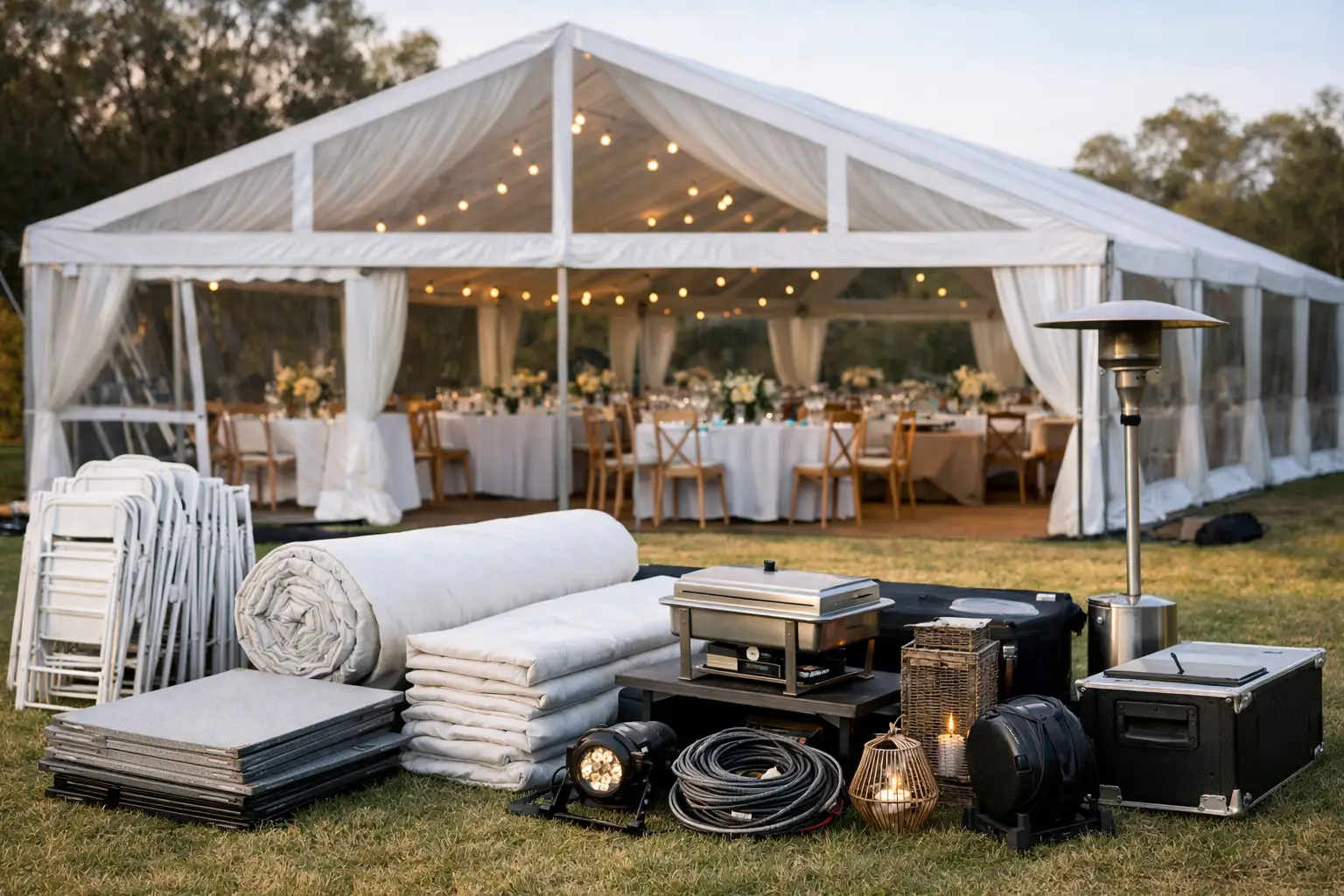
A marquee can turn a lawn, paddock, courtyard or blank event site into a polished venue. But the structure itself is only one part of the job. When clients ask what does marquee installation include, the useful answer is not simply “putting up a tent”. It is the planned work that makes the space safe, stable, weather-ready and ready for guests on time.
For a backyard wedding, corporate function or large-scale production, inclusions should be clear before you confirm your booking. The right installation service removes guesswork around access, anchoring, layouts and pack-down, so you can focus on the event rather than managing crews and equipment.
What does marquee installation include?
A professional marquee installation generally begins well before the crew arrives. Your hire partner should confirm the marquee size, event date, site address, access details, surface type and required setup window. From there, the team can plan the structure, crew requirements, transport and any additional equipment needed to make the space functional.
On installation day, a typical service includes delivery of the marquee components, unloading, assembling the frame and roof, securing the structure, fitting walls or clear panels where quoted, and completing a final check before handover. If you have hired flooring, furniture, lighting, tables, chairs or a dance floor as part of the same order, these items can be scheduled into the setup sequence too.
The exact scope depends on your approved quote. A small pop-up-style shelter on a clear driveway has very different requirements from a 300-guest clear-span marquee on uneven grass. Transparent inclusions matter because they prevent surprise labour, access or site charges later.
Site assessment and setup planning
A good installation starts with the site. The team needs to know where the marquee will sit, how vehicles will enter, whether there are tight gates or stairs, and whether the ground is level enough for the chosen structure. They also need to consider overhead branches, powerlines, underground services, drainage and nearby buildings.
For more complex events, a site visit or detailed site assessment may be required before booking. This is particularly valuable for venues with restricted loading times, regional properties, waterfront locations and sites where multiple suppliers need to work around each other.
Your event consultant should also help translate guest numbers into a practical footprint. A seated dinner, cocktail party, ceremony and dance floor each use space differently. Allowing room for catering, a bar, speeches and guest circulation from the beginning avoids a marquee that looks impressive but feels overcrowded.
Delivery, assembly and secure anchoring
The installation crew delivers the marquee in scheduled vehicles, unloads the components and assembles the structure in the agreed position. This work is completed by trained crew using the appropriate equipment for the marquee type and site conditions.
Anchoring is a critical part of the installation. On grass or suitable soil, the marquee may be secured with stakes. On concrete, tiles or other hard surfaces where staking is not possible, weighted ballast may be required. The anchoring method affects both cost and the space around the marquee, so it should be identified in the quote rather than decided when the truck arrives.
Marquees are engineered structures, not decorative accessories. Their safe installation relies on correct anchoring, adequate clearances and conditions that suit the equipment. If the site presents an issue, such as unsuitable ground or restricted access, the solution may involve a different marquee size, extra weights, a revised layout or another location on the property.
Walls, doors and weather protection
A roof provides shade and shelter, but side walls are what make a marquee adaptable to Australian weather. Depending on your booking, installation can include solid white walls, clear walls, window walls, gable ends and entry options. These may be fitted during setup or left ready to close later if the forecast changes.
The best wall configuration depends on the season, direction of sun, wind exposure and event style. An open-sided marquee can feel bright and relaxed for a daytime garden celebration. A fully enclosed space with clear panels can better suit an evening wedding, winter function or corporate event where guest comfort is non-negotiable.
No marquee can remove all weather risk, particularly in severe conditions. However, experienced planning gives your event the strongest possible foundation, including an appropriate structure, secure installation and a clear wet-weather layout.
Flooring and event-ready finishing
Marquee installation can include more than the structure when these items are hired and quoted together. Flooring is one of the most valuable additions for grass, uneven ground or high-heel events. It creates a stable surface for guests, improves the visual finish and helps protect furniture from soft or damp ground.
A complete event setup may also include carpet, dance flooring, staging, tables, chairs, lounge furniture, bar units and tableware. Installing these in the right order matters. Flooring normally goes in before furniture, while lighting, styling and catering requirements need to work around the final layout.
This is where a single accountable supplier makes planning simpler. Zero Three Party Hire can coordinate marquee infrastructure with the furniture and event equipment that sits inside it, giving you one itemised quote and one clear delivery plan rather than several competing setup schedules.
Lighting, power and AV coordination
Lighting transforms a marquee after sunset, but it needs to be planned before installation is complete. Depending on the package, the team may install festoon lighting, chandeliers, uplighting or practical event lighting as part of the build. Placement should suit ceiling height, entry points, tables and the dance floor rather than being treated as an afterthought.
Power distribution and audio-visual equipment may require coordination with a qualified electrician, AV technician or venue representative. Your marquee crew can work to an approved plan, but electrical connections, generator supply, testing and compliance requirements should be clearly assigned. For corporate presentations, live music or formal speeches, this coordination protects the run sheet as much as the guest experience.
What may not be included automatically
Installation is not always a fixed, all-inclusive service. Some requirements depend on the site, event scale and local conditions. Permits, traffic management, electrical work, generator hire, council approvals, engineering documentation, site remediation and security are examples that may sit outside a standard marquee installation unless specifically quoted.
Site preparation is also often the client’s responsibility. The installation area should be clear of vehicles, outdoor furniture, pet waste, low-hanging branches and household items before the crew arrives. You may need to arrange access to locked gates, notify neighbours where appropriate and identify any known underground pipes, irrigation lines or cables.
Ask direct questions before you lock in the date: Is delivery included? Does the price cover installation and pack-down? Are walls, weights and flooring included? What access does the crew need? Who manages wet-weather decisions? A professional quote should answer these practical points in writing.
Pack-down and collection after the event
The job does not end when the final guest leaves. Pack-down usually includes returning at the agreed time, removing hired furniture and equipment, dismantling the marquee, loading all components and leaving the site reasonably clear of hire items.
Collection timing matters. A backyard party may need an early morning pack-down to return the property to normal, while a venue or corporate site might have a strict bump-out window. If you need the marquee removed immediately after an event, or kept in place for several days, this should be confirmed during quoting.
Clients should remove personal styling, gifts, food, florals and rubbish before collection unless another arrangement has been made. This helps the crew work safely and allows a clean, efficient handover.
Planning for a calm installation day
The most successful marquee events are decided on paper before the crew reaches the site. Confirm your guest count, final layout, access route, installation date and collection date early. Share venue rules, site photos and contact details for your planner, caterer or venue manager where relevant.
Then give the installation team room to do their work. A clear site, reliable access and an agreed layout allow the crew to focus on what they do best: delivering a stable, immaculate event space that is ready when your suppliers and guests arrive.
A marquee should feel like part of the celebration, not another moving part to manage. With a detailed quote and professional installation plan in place, your empty space can become the setting your guests remember for all the right reasons.