
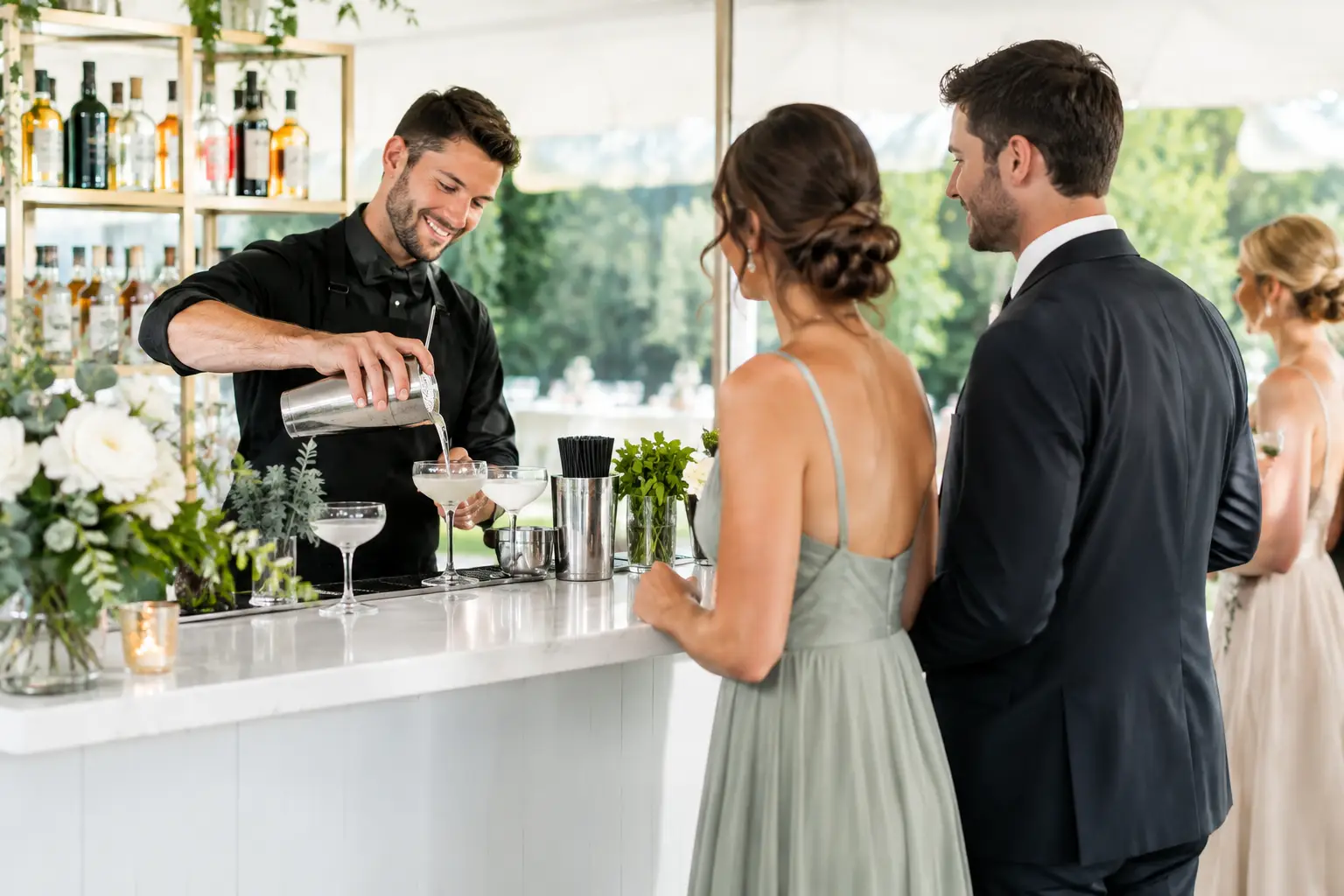
A beautiful reception can lose momentum quickly when guests are queuing for drinks, glassware runs short or the bar looks like an afterthought. Well-planned wedding bar hire gives your drinks service a proper home, keeps staff moving efficiently and makes the whole reception feel considered from the first toast to the final song.
The right setup is not simply about hiring a bar counter. It is about matching the bar’s size, position and equipment to your guest numbers, menu, venue and service style. Get those details right early and your bar becomes part of the atmosphere, rather than another problem to solve on the day.
Start with the way you want drinks served
Before choosing a bar style, decide how guests will order and receive drinks. A cocktail-led celebration needs more preparation space, ice and refrigeration than a reception serving beer, wine and sparkling. A formal sit-down dinner may only need a bar for pre-dinner drinks and post-meal service, while a relaxed marquee wedding may rely on the bar all evening.
For most weddings, one service point works well for smaller guest lists when the drinks menu is simple and experienced bar staff are behind it. Once numbers rise, queues become the key consideration. A second service point, a dedicated sparkling station or a separate cocktail bar can keep guests circulating rather than waiting in one long line.
The placement matters as much as the bar itself. Position it where guests can find it easily, but avoid blocking the entrance, dining area or route to the dance floor. In a marquee or backyard, allow clear access for staff to restock from behind the bar. At a venue, confirm where deliveries can enter and whether the floor can support the equipment you have in mind.
Choose wedding bar hire to suit the setting
A bar should look at home in its surroundings. For a polished ballroom or formal reception, a clean white, black or timber-fronted bar can complement the room without competing with your florals and table styling. For vineyard, coastal or garden weddings, timber bars often bring warmth while still providing a professional service station.
Modular bars are particularly useful because they can be configured around the room rather than forcing the room to work around a fixed shape. A straight bar may suit a narrow venue wall, while an L-shaped or longer setup creates more bench space for a busy reception. The best configuration depends on available space, expected demand and whether staff need separate areas for serving, pouring and washing glassware.
It is worth considering what guests see from the front as well as what bar staff need behind it. A premium bar facade creates a finished visual line in photographs. Behind the counter, however, the practical details do the hard work: underbench refrigeration, ice tubs, shelving, speed rails and enough clear bench space for service.
Plan the equipment behind the counter
A bar can be visually impressive and still be difficult to operate if its supporting equipment has been overlooked. Your caterer, bar manager or beverage supplier may have their own requirements, so confirm responsibilities before finalising your hire list.
Refrigeration is one of the first questions to settle. Chilled wine, beer, mixers and non-alcoholic options need more capacity than many hosts expect, particularly in warmer Australian weather. If the event is outdoors, refrigeration should be placed close enough to the bar for efficient restocking while allowing ventilation and safe cable management.
Glassware deserves the same attention. Estimate quantities based on your beverage list, guest count and washing arrangements, not just one glass per person. If glassware will not be washed and returned during service, you may need multiple rounds of wine glasses, tumblers and champagne flutes. A professional hire partner can help convert your drinks plan into practical quantities.
Do not forget the less glamorous essentials: ice, bins, bar mats, water jugs, cocktail tools, trays and lighting. For an outdoor or evening celebration, task lighting behind the bar helps staff serve accurately after sunset. It also makes the setup feel intentional rather than improvised.
Size the bar around guest numbers and timing
There is no single bar size that suits every wedding. A 60-guest lunch with beer, wine and a signature spritz has very different service needs from a 250-guest evening reception with cocktails, spirits and a late dance floor.
As a planning guide, guest numbers, drinks complexity and peak service times should be assessed together. Pre-ceremony drinks, the period immediately after the ceremony, and the first hour after dinner are often the busiest windows. If every guest arrives at the bar at once, even a generous counter can feel undersized.
Consider whether a dedicated welcome-drink station could take pressure off the main bar. Pre-poured sparkling, bottled beer in ice baths or trays of a chosen cocktail can speed up arrival service and make a strong first impression. The main bar can then focus on individual orders once guests have settled in.
For larger weddings, separate beverage zones may be more effective than one oversized bar. A main bar near the dance floor, water stations near dining tables and a small spirits or cocktail service point elsewhere can reduce congestion while giving the reception a more generous feel.
Confirm power, access and venue rules early
Wedding bar hire is often straightforward until access, power or venue requirements are left until the final week. Refrigeration, lighting and portable equipment need suitable power supply, particularly at private properties, rural locations and temporary event sites. Your supplier should know whether power will be available, where it is located and whether cables need to cross guest areas.
Access is equally important. Measure gates, paths, lifts, doorways and any steps between the delivery point and the bar location. A beautiful backyard bar plan is only useful if equipment can reach the site safely without crossing soft grass, narrow footpaths or uneven ground.
Ask the venue about its alcohol rules, preferred suppliers, bump-in windows and requirements for protection under bars or on polished floors. Some venues provide staff but not furniture or refrigeration; others have strict rules around external beverages. Clear confirmation avoids duplicate costs and last-minute changes.
What a managed bar hire service should include
For a wedding, the operational side of hire matters as much as the equipment. You should receive an itemised quote that clearly states what is included, the delivery timing and any setup or collection charges. If the plan changes, you need one contact who can update the order without creating confusion between multiple suppliers.
A managed service is particularly valuable for marquee, backyard and blank-canvas weddings. The team should coordinate delivery access, position the bar according to the approved floor plan, install the required equipment and return for collection after the celebration. This means family members are not carrying furniture, searching for extension leads or making room in a ute the morning after the wedding.
At Zero Three Party Hire, a dedicated event consultant can help bring bars, furniture, lighting, tableware and major event infrastructure into one coordinated delivery. That single point of accountability is valuable when timings are tight and presentation cannot be compromised.
Questions to settle before you lock in your date
A short planning conversation can prevent most bar-service surprises. Before confirming your order, make sure you can answer these questions:
- How many guests will be drinking, and when will the busiest service periods occur?
- Is the menu beer and wine only, or does it include cocktails, spirits and barista-style coffee?
- Who is supplying staff, beverages, ice and glassware washing?
- What power, access and venue restrictions apply?
- Does the quoted service include delivery, installation, pack-down and collection?
If you are unsure about any answer, that is the right time to ask for guidance. A reliable hire team will not simply hand over a bar and leave you to work out the rest. They will identify the practical requirements before delivery day, when changes are still easy to make.
The most successful wedding bars rarely call attention to their logistics. Guests see a polished counter, cold drinks and quick service; you see your people enjoying the celebration. Start with your guest experience, confirm the operational details early, and choose a setup that lets the evening flow exactly as it should.