
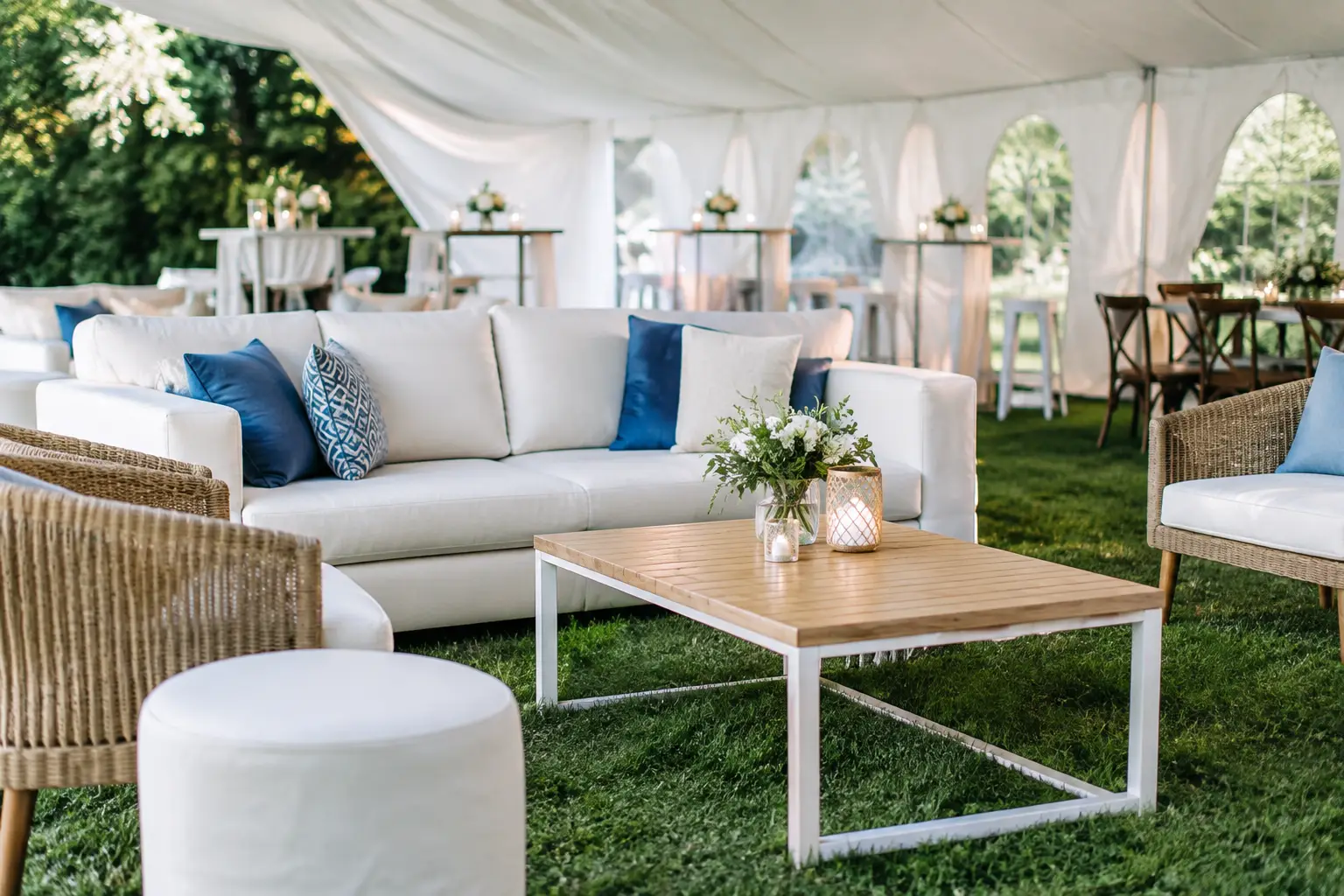
A beautiful event can lose its polish quickly when guests have nowhere comfortable to sit, tables are too small for service, or the layout creates bottlenecks around the bar. The right party furniture does more than fill a venue. It gives your occasion structure, supports the way guests move and connect, and makes the whole setting feel considered from the moment they arrive.
For a backyard birthday, that might mean relaxed lounge settings and cocktail tables that encourage mingling. For a wedding or corporate gala, it could mean coordinated dining chairs, generous guest tables, bar furniture and a clear floor plan that keeps service running smoothly. The best choice depends on your guest list, venue, event style and how the day or night needs to operate.
Start With the Way Your Event Will Run
Before selecting colours, chair styles or table shapes, map out the guest experience. Consider where people will arrive, leave bags, collect a drink, eat, mingle, listen to speeches and dance. Furniture should support each of those moments without making the space feel crowded.
A seated dinner needs a different approach to a standing cocktail event. If guests are dining for several hours, comfort and table spacing matter more than squeezing in extra numbers. If the focus is networking or a casual celebration, a mix of bar tables, stools and lounge seating gives guests choice while preserving open areas for conversation.
This is also where an accurate guest count matters. Allowing for every attendee is essential, but so is allowing for the format. A 100-person cocktail party does not require 100 dining chairs, yet it still needs enough seating for older guests, families and anyone wanting a break from standing. A practical event plan balances capacity with comfort.
Party Furniture Should Match the Venue, Not Fight It
Every venue has its own constraints. A level indoor function room may suit long banquet tables and formal seating. A sloping lawn, narrow courtyard or exposed waterfront site calls for more careful planning around access, stability and weather protection.
For outdoor events, surfaces are a major consideration. Chairs and tables need firm, even ground, while lounge furniture and styling elements should be positioned away from damp grass or uneven paving. If a marquee is part of the plan, the furniture layout needs to be confirmed alongside the marquee size, entry points, catering area and dance floor. Leaving these decisions until delivery day creates avoidable compromises.
Scale matters too. Large furniture can make a compact space feel cramped, while small cocktail settings can disappear in a high-ceilinged warehouse or production venue. Choosing pieces in proportion to the site creates a more polished result and makes service access easier for catering, AV and event staff.
Consider access before confirming your hire
A premium setup still relies on practical access. Let your hire team know about stairs, lifts, narrow gates, long carries, loading docks, restricted delivery times and any venue rules. For private homes, think about gate widths, pathways and whether a ute or truck can safely approach the property.
These details affect delivery planning, crew requirements and setup time. Raising them early means the quote reflects the real job, not an idealised version of it. It also protects your schedule when suppliers, caterers and stylists are all working to a tight event window.
Choose Seating for Comfort and Occasion
Chairs are one of the most visible parts of an event setup. They frame the ceremony, dining space and presentation area, so their condition and style matter. Clean, well-maintained chairs immediately lift the room. Mismatched or worn seating can undermine an otherwise thoughtful event design.
For weddings and formal dinners, select seating that complements the tableware, linen and venue rather than competing with them. A refined chair profile can add elegance without requiring excessive styling. For conferences, presentations and large productions, consistency, comfort and efficient row spacing often take priority over decorative detail.
Lounge furniture deserves the same attention. It creates a natural place for guests to settle in, particularly at long receptions, engagement parties and brand activations. Use it deliberately rather than placing sofas wherever there is spare room. A lounge zone works best when it has a purpose, such as a quieter conversation area away from the dance floor or a welcoming space near a bar.
Get Table Sizes Right for Food, Drinks and Service
Tables set the rhythm of an event. The choice between round, trestle, bar and coffee tables shapes not only the look of the room but how easily guests can eat, move and interact.
Round tables are often suited to social dining because everyone can see each other. Long tables can create a more dramatic communal setting and work well for shared feasts or family-style service. Cocktail tables encourage circulation and are ideal near bars, entrances and breakout areas. Coffee tables give lounge areas a finished feel and provide a useful place for drinks.
The trade-off is space. Larger tables provide a more generous dining experience, but they require wider aisles and more room for chairs to move back. Your caterer may also need clear paths for trays, clearing and beverage service. An event can technically fit more tables than it should. A well-planned layout protects guest comfort and keeps the room looking calm rather than crowded.
Do not forget the working furniture
Some of the most important furniture is not front and centre. Catering tables, gift tables, registration desks, cake tables, lecterns and DJ tables keep the event operational. Planning for them early prevents last-minute requests that disrupt the floor plan.
For corporate events, consider registration, speaker staging, charging areas and breakout seating. For private celebrations, account for gifts, cake presentation, food stations and somewhere for personal items. These practical zones should feel integrated into the event, not added as an afterthought.
Build a Cohesive Look Without Overstyling
A premium event does not require every item to be a statement piece. It needs a clear direction. Start with the atmosphere you want to create: formal and elegant, relaxed coastal, modern cocktail, garden party or high-energy corporate celebration. Then select furniture that supports that direction through shape, finish and proportion.
Keep the strongest visual moments for the areas guests will notice most, such as the ceremony, head table, bar, stage or entry. In other areas, consistency is usually more effective than excess. Coordinated chairs, tables and lounge settings allow florals, lighting, tableware and signage to do their job without visual clutter.
Lighting changes the way furniture presents after dark, especially outdoors or under a marquee. A pale chair can look crisp in daylight but flat under poor lighting. Dark lounges can create a sophisticated mood but may need surrounding lamps, festoon lighting or feature lighting to remain inviting. Planning furniture and lighting together produces a more intentional finish.
Hire Support Is Part of the Furniture Decision
Furniture hire is not simply about selecting items from a catalogue. For important occasions, the operational service behind the furniture matters just as much. You need clear inclusions, a realistic delivery window, clean presentation-ready stock and a crew that understands the approved layout.
A reliable supplier will help confirm quantities, flag venue constraints and coordinate setup around other trades. They should also provide an itemised quote so you can see what is included before committing. What you approve should be what you pay, with any changes discussed clearly before event day.
For larger events, installation and pack-down deserve early attention. A 500-plus guest marquee function, gala or production event has moving parts that cannot be managed through guesswork. Tables, seating, staging, lighting and AV need to arrive in the right sequence and be placed to plan. Having one accountable team across key infrastructure reduces supplier handovers and gives organisers one clear point of contact.
Zero Three Party Hire approaches furniture as part of the complete event environment, with tailored planning support, professional delivery, on-site setup and collection arranged around your schedule. That means less time chasing separate suppliers and more confidence that the space will be ready for guests.
Confirm These Details Before You Lock In Your Date
Before finalising your party furniture, confirm your final guest estimate, venue access, event timings and wet-weather plan. Check whether furniture needs to be installed before styling, catering or technical production begins, and ensure collection timing works with venue requirements.
Ask for the proposed layout or talk through it with your event consultant. A small change, such as moving the bar away from the entry or widening a central aisle, can improve the entire guest experience. If your numbers may change, understand the cut-off date for amendments and the process for adding items.
The right furniture should feel effortless to your guests. When every chair, table and lounge setting is in the right place, people stay longer, settle in faster and remember the occasion for the right reasons. Start with how you want guests to feel, then build the space around that.