
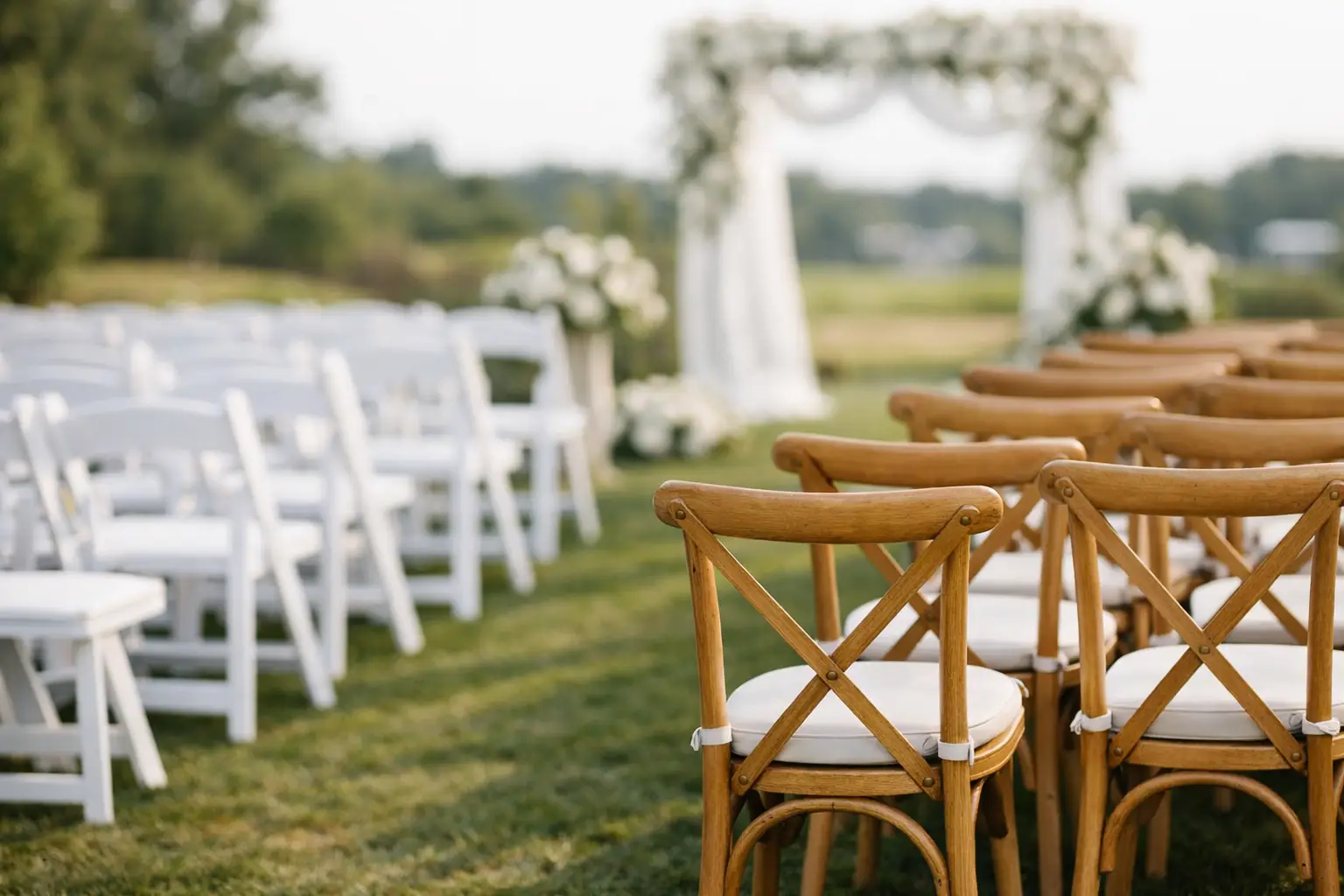
A ceremony site can look perfectly set at 2 pm, then feel cramped, patchy or underprepared once guests arrive. The difference often comes down to one practical question: how many chairs for wedding guests should you actually hire? The answer is not always the same as your RSVP total. Your ceremony style, reception format, venue access and whether the same chairs will be reused all affect the final number.
For most weddings, the safest starting point is one chair per confirmed guest, plus a small allowance for last-minute additions, suppliers who need seating and any separate ceremony or reception spaces. From there, the count becomes a layout decision rather than a guess.
How many chairs for a wedding ceremony?
For a seated ceremony, hire a chair for every expected guest. If 100 guests have confirmed, plan for 100 ceremony chairs as the baseline. Add a modest buffer of around 5 to 10 chairs where the guest list is still moving, families are likely to bring young children, or you want flexibility for unexpected attendees.
That buffer is not about filling every spare corner. It is about avoiding the awkward moment where a grandparent, late arrival or photographer’s assistant is standing at the back because the count was too tight. At a formal wedding, particularly one with a longer ceremony, adequate seating is part of guest comfort.
Also consider whether particular guests need a specific chair type or position. Older relatives may appreciate chairs with arms, while guests using mobility aids need a clear, level route and room beside their seat. These requirements are best built into the layout before delivery day, rather than adjusted once everyone is arriving.
Ceremony seating example
A wedding with 120 confirmed guests may hire 128 ceremony chairs: 120 for the guest list, six as a practical contingency, and two reserved in accessible positions. If the celebrant, musicians or readers need chairs, include those separately rather than taking them from the guest allocation.
The same principle applies to intimate weddings. A 30-person ceremony still benefits from a small buffer, especially when the venue has limited nearby furniture or the event is held on private property.
Reception chairs depend on the meal and format
A seated reception needs one chair per guest at the dining tables. Start with the confirmed guest count, then add seats for anyone dining with the group, such as the couple’s photographer or videographer where agreed, a babysitter, or key suppliers who have been allocated a meal.
A plated dinner generally requires a full chair count at tables. Guests will be seated for service, speeches and much of the evening, so there is little room to reduce numbers. A long-table layout, round tables or a combination of both changes the floor plan, but not the need for a seat for each diner.
For cocktail-style receptions, the calculation is more flexible. You may not need a chair for every guest, but you should provide enough mixed seating that people can comfortably rest, eat and socialise. As a guide, seating for 30 to 50 per cent of guests can work for a short, energetic cocktail event with substantial lounges, bar tables and food stations. For a longer event, or one with many older guests, increase that proportion.
The trade-off is simple: fewer chairs can create a lively, open feel, but too little seating can leave guests balancing plates and searching for somewhere to sit. If speeches, a formal meal or extended timeframes are part of the plan, lean towards more seating.
Head tables, bridal tables and sweetheart tables
Count these separately from general guest seating. A bridal table may need seats for the newlyweds and the wedding party, while a sweetheart table only needs two feature chairs. Ensure the style works with the guest chairs, but do not assume the numbers are interchangeable.
Feature seating can also be useful for the signing table, a quiet parents’ table, a lounge area or photo moments. These pieces have a clear purpose, so they should be shown on the plan and included in the quote from the start.
Can ceremony chairs be reused at the reception?
Reusing ceremony chairs for the reception can reduce hire quantities and create a consistent look, but it only works when timing, access and staffing allow it. The key question is what guests will do while chairs are being moved.
If the ceremony is followed by canapés in a separate area, the crew may be able to reposition chairs while guests mingle. This is often workable at venues with clear access, a defined wet-weather option and enough time between the ceremony and dinner. At a backyard wedding or rural property, moving chairs across grass, uneven ground or long distances may take longer than expected.
It is less practical when the ceremony and reception begin back-to-back, when the same space is needed immediately for dining, or when the layout change involves multiple suppliers. In those cases, separate ceremony and reception chairs can be the calmer choice. You are paying for certainty, not just furniture.
Discuss the transition early with your venue coordinator or event consultant. A detailed schedule should cover when guests move, who resets the space, where furniture is staged and what happens if rain changes the plan. Good event logistics make a quick changeover feel effortless because the work has been organised well before the day.
Do not forget the chairs beyond your guest count
Wedding chair planning is often derailed by the seats nobody counted. Your final plan may need chairs for the celebrant, readers, musicians, DJ, MC, photo booth attendant, gift table area or suppliers taking a meal break. Not every vendor needs a guest-style chair in the main space, but they may need practical seating elsewhere.
For a marquee wedding, also think about the areas around the main dining setup. A lounge corner, bar area, signing table or outdoor fire-pit space can make the event feel more generous without changing the dining count. These chairs should be selected for how guests will use them, not simply added because there is spare room.
Keep children in mind too. High chairs, booster seats or standard chairs for older children need to be confirmed with parents in advance. A child’s place setting without a suitable seat creates avoidable pressure during setup.
Match the chair quantity to the layout
The right quantity only works when the chairs fit the room. Overcrowded tables, narrow aisles and blocked service paths make even premium furniture feel uncomfortable. Your layout should allow guests to sit down and move back from the table without disrupting another row.
As a practical rule, allow for clear pathways to exits, amenities, the bar and the dance floor. Leave enough space behind dining chairs for service staff to work safely, especially for plated meals. If you are using a marquee, check the internal dimensions rather than relying on an approximate capacity figure. Pole positions, flooring, staging, buffet tables and dance floors all reduce the usable footprint.
Outdoor ceremonies need another layer of planning. Chairs should sit on firm, reasonably level ground. Soft lawns, steep slopes and loose gravel can affect stability and spacing. A professional site check can identify whether chair feet, flooring, matting or a revised layout will give guests a safer, more polished experience.
A simple chair-count process that avoids surprises
Begin with your latest confirmed guest list and separate the event into ceremony, dining and casual seating zones. Add the people who need seats but are not on the invitation list, then decide whether furniture can realistically be reused between spaces. Finally, include a small contingency where the numbers or logistics justify it.
Before locking in your hire, check four details with your supplier: the exact chair style and condition, delivery and collection windows, who is responsible for placement, and whether a layout change is included. These operational details matter as much as the chair count. A clean, consistent chair setup delivered on time gives the whole event a more considered finish.
Zero Three Party Hire can help translate guest numbers into a clear equipment schedule, from ceremony rows and dining tables to lounges, marquees and wet-weather planning. With an itemised quote and a dedicated consultant, you can approve the setup knowing what is arriving, where it will go and when the crew will be there.
The best chair count is the one that lets every guest settle in without you thinking about furniture again. Confirm your numbers early, allow for the moments between ceremony and celebration, and choose a setup that gives your wedding room to breathe.