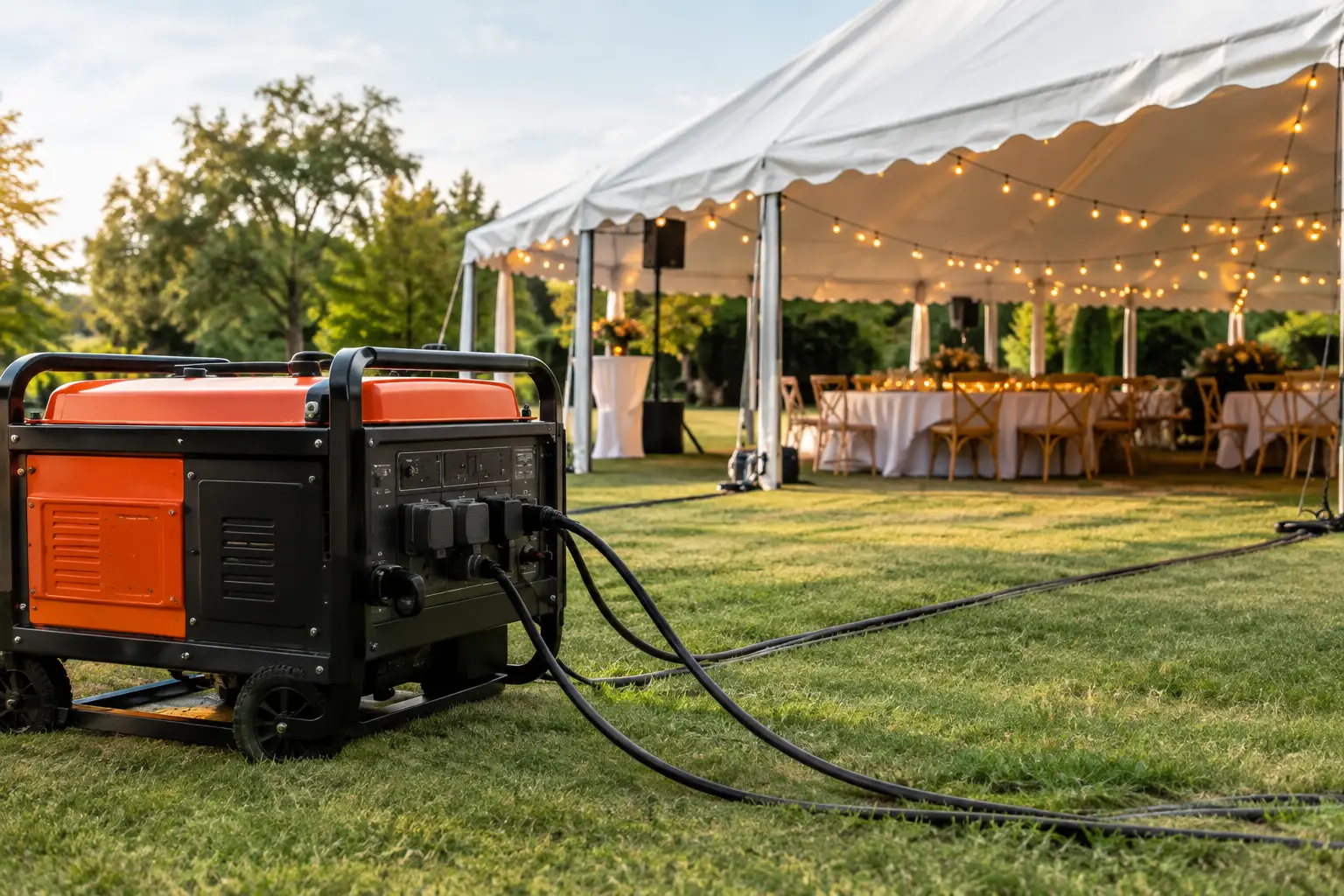
A beautiful outdoor site can become a difficult event site the moment the lights flicker, the bar fridge trips a circuit or the band loses power mid-set. Knowing how to power outdoor events is not just about hiring a generator. It is about designing a reliable temporary power plan around what guests will see, hear, eat and use from arrival through to pack-down.
For a backyard wedding, corporate activation, regional marquee event or large-scale production, power needs to be planned early. It affects site layout, equipment choices, safety, noise management and the timing of your installation. Get it right, and the infrastructure disappears into the background while the event runs exactly as intended.
Start with the site, not the generator
The first question is not, “What size generator do we need?” It is, “What power is already available and where is it located?” A venue may have dedicated outdoor circuits, while a private property may only have standard 10-amp outlets shared with the house. These are very different starting points.
Walk the site before confirming equipment wherever possible. Identify the main switchboard, existing outlets, access routes and the distance between the power source and the event footprint. Check whether the proposed generator position is accessible for delivery, level, dry and suitably separated from guests, catering and sleeping areas.
A generator also needs room to operate safely. Exhaust, heat and noise must be managed, and cables need a clear route that does not create a trip hazard across lawns, paths or entry points. Wet ground, narrow side access, stairs and soft surfaces can all change the installation approach.
For larger events, the power plan should sit alongside the site plan. Your marquee, stage, caterer’s prep area, bar, bathrooms, lighting and audio-visual equipment all need to be positioned with electrical distribution in mind. Moving a bar or stage after cable runs are installed is never as simple as it sounds.
Calculate the real load for your outdoor event
Every electrical item draws power, but not every item draws it in the same way. Lighting may have a modest, consistent load. Refrigeration cycles on and off. Pumps, motors and some audio equipment can require a higher surge when they start. Heating equipment and catering appliances can consume far more power than most hosts expect.
Begin with a complete equipment schedule. Include event furniture only where it has an electrical component, then account for lighting, PA systems, DJ decks, band equipment, screens, bar refrigeration, coffee machines, catering equipment, fans, portable cooling, heaters, bathrooms, pumps, charging stations and any supplier equipment brought to site.
A standard Australian 10-amp outlet is commonly limited to around 2,400 watts at 240 volts. That can be enough for low-demand equipment, but it is not a solution for a full event infrastructure. A few fridges, decorative lighting and a coffee machine can quickly exceed what one household circuit can safely support.
Do not rely on labels alone or assume that multiple wall outlets mean separate circuits. They may be connected to the same circuit at the switchboard. A qualified electrician or experienced event power supplier can confirm what is available and identify where loads need to be separated.
As a practical rule, allow headroom rather than selecting a generator that only just meets the estimated wattage. The final capacity depends on the mix of equipment, start-up loads, expected operating time and whether the event requires backup capacity. An oversized solution may cost more and take up more space, but an undersized one can cause interruptions that are costly to fix once guests have arrived.
Separate critical and non-critical power
Not all power points have the same priority. Emergency lighting, essential refrigeration, toilets, production control and core audio-visual equipment may need a protected or backed-up supply. Decorative lighting, mobile charging and non-essential styling elements sit lower on the priority list.
Separating these circuits gives the event team options if there is an issue. It also helps prevent a single appliance from taking down the sound system or main lighting. For weddings and formal functions, this distinction is especially useful during speeches, ceremonies and key moments on the run sheet.
Choose the right power source
Mains power is often the most convenient option when the site has sufficient capacity, appropriately located outlets and confirmed circuits. It can reduce generator noise and fuel requirements, but it still needs professional distribution, safe cabling and realistic load management.
When mains power is limited or unavailable, a generator provides the independence needed for marquees, paddocks, private properties and temporary event sites. Generator choice should be based on the calculated load, the number and type of outlets required, site access, operating hours and noise sensitivity.
For premium events, quiet-running generators are usually the better fit. They are particularly valuable near dining areas, ceremonies, acoustic performers and residential neighbours. Positioning still matters. Even a quiet generator should not become the soundtrack to dinner.
Battery systems can also suit selected applications, especially low-load lighting, small activations or noise-sensitive locations. They are not a universal replacement for generator power. High-demand catering, large audio-visual systems and extended operating periods may still require generator or mains support. The right answer depends on the event, not the latest equipment trend.
Build safety into every cable run
Temporary power should look controlled, not improvised. Cables need to be rated for the task, protected where they cross traffic areas and kept clear of standing water, sharp edges and vehicle routes. Cable covers are particularly important where guests, staff or suppliers cross the same path throughout the event.
Outdoor events also need weather planning. Rain does not automatically stop an event, but it changes the risk around connections, distribution boards and exposed equipment. Keep electrical equipment elevated where needed, use suitable weather protection and make sure the site team knows who is authorised to adjust or disconnect equipment.
Residual current devices, correctly rated leads and compliant temporary distribution are essential safeguards. Electrical work, generator connections and fault finding should be handled by appropriately qualified professionals. A host or event manager should never be left trying to diagnose a tripped board in the middle of service.
Before doors open, test the system under realistic conditions. Turn on refrigeration, lighting, sound and catering equipment as close as possible to the way they will operate during the event. This is when hidden problems are easiest to find, not when the first course is being served.
Plan for timing, fuel and backup
Power is an operational service, not a one-time delivery. A generator may need to arrive before the marquee build, remain active during styling and catering set-up, run through the event, then support pack-down after guests leave. That operating window determines fuel planning, crew timing and access requirements.
For late finishes, multi-day weddings or production events, confirm fuel capacity and refuelling arrangements in advance. Refuelling cannot be treated as an afterthought, particularly where access is restricted or the site has strict operating conditions.
A backup plan is equally valuable. It may be a second generator, a reserved circuit, battery support for key equipment or a clear priority schedule if load needs to be reduced. The appropriate level of contingency depends on the consequences of an outage. A casual afternoon celebration may accept simpler arrangements than a 500-guest gala with live production and catering service.
Make one team accountable for the event setup
Power works best when it is coordinated with the rest of the event build. The provider installing your marquee, lighting, furniture, dance floor and audio-visual equipment should understand where the distribution board sits, when power is required and which suppliers are connecting to it.
At Zero Three Party Hire, this coordination can be planned through an itemised quote, site-aware equipment layout and scheduled delivery, installation and collection. It removes the common gap between separate suppliers, where everyone assumes somebody else has allowed for the cables, capacity or access.
Before confirming your date, make sure your plan covers these four practical checks:
- the total expected load, including catering and supplier equipment;
- the confirmed power source, capacity and generator location;
- protected cable routes that work with guest movement and vehicle access; and
- an on-site contact who understands the set-up, testing and shutdown plan.
The best outdoor event power plan is rarely the most visible part of the celebration. It is the quiet confidence that the lights stay warm, the music stays clear, dinner service stays on schedule and your team can focus on the guests rather than the switchboard.