
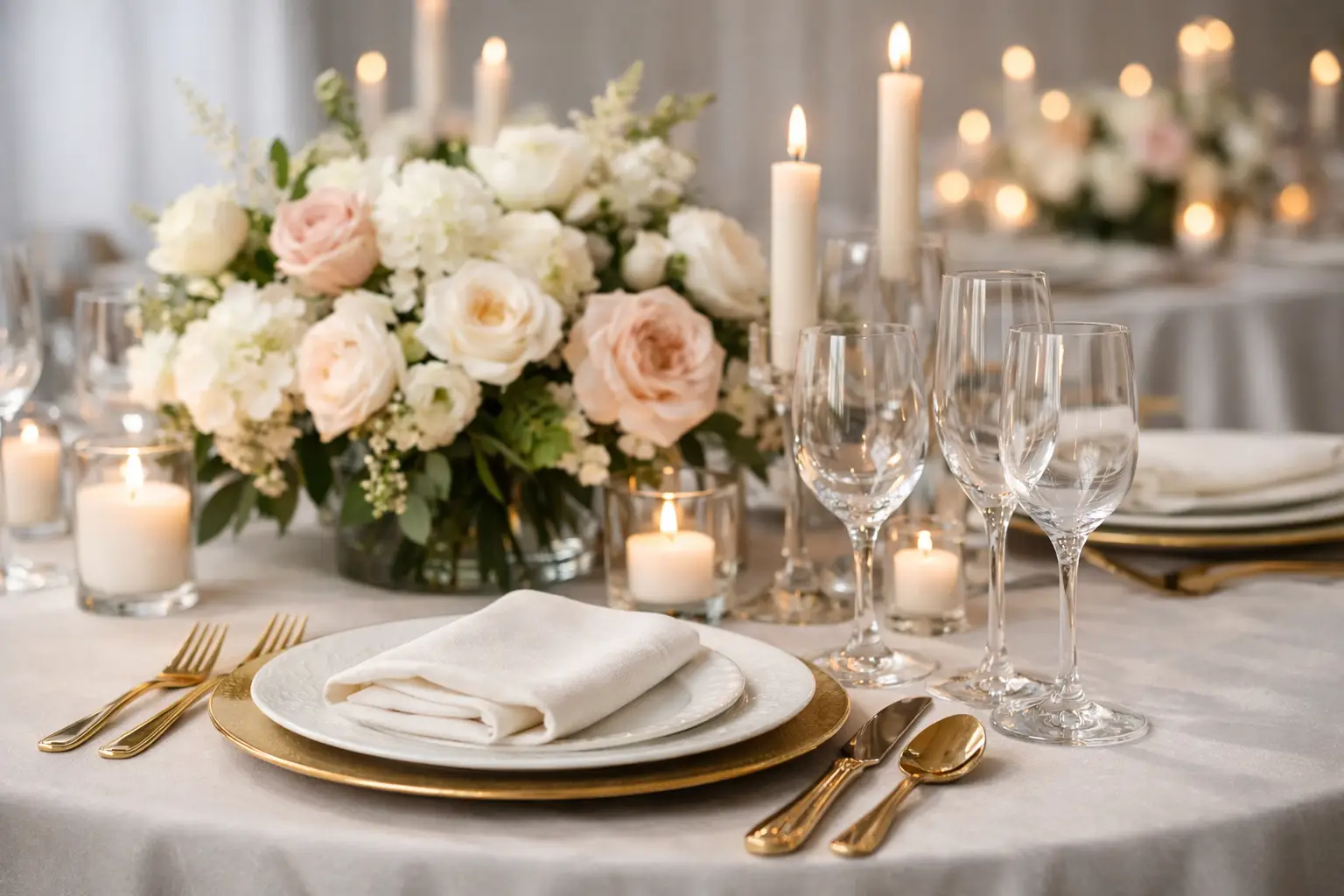
Best Table Settings for Weddings That Feel Considered

Best Table Settings for Weddings That Feel Considered

Blog

A wedding table is where guests settle in, share a meal and spend most of the reception noticing the details. The best table settings for weddings do more than look beautiful in photographs. They give every guest enough room, support smooth service and make the overall styling feel intentional from the first glass of bubbles to the last dance.

The right choice depends on your guest count, menu, venue and the atmosphere you want to create. A long-table celebration in a private property marquee needs a different approach to a formal ballroom dinner or a relaxed winery reception. Start with the experience you want guests to have, then build the setting around the practical requirements that make it work.

Best table settings for weddings start with the layout

Table shape sets the rhythm of the room. Round tables are a reliable choice for seated weddings because guests can talk easily across the table and service teams can move around the room efficiently. They suit classic, elegant receptions and work particularly well when you need clear pathways between tables.

Long rectangular tables create a more communal feeling. They are ideal for shared feasts, family-style dining and venues where the architecture lends itself to a strong central line. They can also make a large marquee feel more structured. The trade-off is that long tables need careful spacing: guests still need room to pull out chairs, and staff need practical access for serving, clearing and refilling drinks.

A mix of shapes can work beautifully, especially for larger weddings. Round guest tables paired with a long bridal table, or long tables with a separate lounge area, add variety without making the room feel busy. The key is to plan the full floor layout before committing to furniture. Allow for the dance floor, bar, catering access, speeches, gift table and safe walkways, not just the number of seats.

For backyard and marquee weddings, this step matters even more. Ground conditions, access points, power locations and wet-weather plans all influence where tables can sit. A polished room begins with a layout that works operationally, not a layout that only works on a mood board.

Choose tableware that matches the meal

A formal plated dinner usually calls for a layered setting: charger plate, dinner plate, side plate, polished cutlery, water glass and wine glassware. This creates a refined result, but only when the table size can comfortably accommodate it. Crowding every place setting with extra pieces can make guests feel boxed in and leave no room for shared bread, wine bottles or floral arrangements.

For a cocktail-style wedding with grazing tables or roaming service, keep guest tables simpler. A quality glass, napkin and a small plate may be all that is needed, with lounge furniture doing more of the heavy lifting. For shared feasts, make room for serving platters and consider how guests will pass food along the table without knocking candles, menus or flowers.

Tableware should feel consistent rather than overly matched. Crisp white dinnerware remains a strong choice because it lets food and florals stand out. Textured linen, coloured glassware or a distinctive charger can add personality without overwhelming the setting. If your colour palette is already expressive, such as bold florals or patterned stationery, quieter plates and napkins often give the table the balance it needs.

Get the proportions right

A beautiful place setting needs breathing room. Oversized charger plates can be striking on a generous round table, but may be impractical on narrow trestle tables. Tall glassware adds elegance, though it should not compete with a large centrepiece or block conversation across the table.

Ask for the actual dimensions of the hired tables and plates before finalising stationery, menus and centrepieces. A menu that looks modest on screen can take up valuable space once it is placed beside glassware, candles and folded napkins. This small check avoids last-minute compromises on the day.

Linen creates the foundation

Linen is often the element that turns hired furniture into a wedding setting. Floor-length cloths bring formality to round tables and conceal table legs, storage or service items beneath. They are a smart choice for formal venues, marquees and receptions where the tables are a central visual feature.

For a more relaxed celebration, bare timber tables can bring warmth and texture. They work best when the tabletop is immaculate and the rest of the styling has enough softness through napkins, runners, florals or candlelight. Timber does not suit every look, though. If the room already has exposed brick, dark flooring and heavy beams, too much wood can make the space feel visually flat.

Table runners are useful when you want colour or texture without covering the entire table. They suit long banquet tables particularly well, but should be chosen with the centrepiece plan in mind. A runner, scattered bud vases, menus and shared platters can quickly become cluttered if there is no clear hierarchy.

Keep centrepieces guest-friendly

Centrepieces should frame the conversation, not interrupt it. Low arrangements are easy for guests to talk over and work well with candle clusters. Tall arrangements can add theatre in a grand room, provided the floral element begins above eye level and the base does not take up too much room.

Consider the practical side before choosing open flames, suspended florals or elaborate installations. Some venues have restrictions on candles, and outdoor weddings need arrangements that can handle wind. If there is a chance of children attending, or tables are close together, stable holders and contained candles are the safer option.

Mixing heights usually gives the room more dimension than repeating one large arrangement on every table. For example, feature florals on selected tables can sit alongside smaller vessels, taper candles or simple greenery elsewhere. This approach can also keep the floral budget focused on the areas guests and photographers will notice most.

Use lighting to finish the table, not fight it

Good lighting makes dinnerware gleam, softens linen and gives evening photographs their warmth. It is particularly important for weddings in marquees, warehouses, private properties and outdoor spaces where venue lighting may be limited.

Candles create intimacy, but they are not a complete lighting plan. Guests still need enough light to read menus, see their meal and move safely through the reception. Overhead festoon lighting can suit relaxed outdoor celebrations, while chandeliers, pendants or carefully positioned uplighting can lift a more formal marquee or blank venue.

Think about the transition from daylight to night. A table setting that looks perfect at 4 pm can lose its impact after sunset if the lighting has not been planned around it. Build this into the site plan early, alongside power, AV equipment and access for installation.

Plan for service, comfort and timing

The most successful wedding tables are designed around real use. Chairs should be comfortable enough for a long dinner and speeches, while still fitting the room with sensible clearance. The table setting must leave space for food service, water refills and clearing without staff reaching across guests or navigating tight gaps.

Confirm your final guest count before locking in table quantities, linen and place settings. It is wise to allow for a small number of spare chairs, plates and glasses, particularly for larger receptions or remote locations where replacement stock cannot simply be collected mid-event. Your caterer should also review the layout before the day so the service style and table setup are aligned.

At Zero Three Party Hire, a dedicated consultant can help translate your guest count, venue dimensions and styling direction into a practical hire plan, then coordinate delivery, installation and collection around your run sheet. That means the furniture, tableware, lighting and key event infrastructure arrive as one considered setup rather than a collection of separate supplier problems.

A considered setting gives everyone room to celebrate

The most memorable tables are rarely the ones with the most pieces on them. They are the ones that feel generous, comfortable and unmistakably suited to the couple and the venue. Choose the elements guests will touch and notice, give the room enough space to operate properly, and let the finishing details support the celebration rather than compete with it.

Best Table Settings for Weddings That Feel Considered

Best Table Settings for Weddings That Feel Considered

Blog

A wedding table is where guests settle in, share a meal and spend most of the reception noticing the details. The best table settings for weddings do more than look beautiful in photographs. They give every guest enough room, support smooth service and make the overall styling feel intentional from the first glass of bubbles to the last dance.

The right choice depends on your guest count, menu, venue and the atmosphere you want to create. A long-table celebration in a private property marquee needs a different approach to a formal ballroom dinner or a relaxed winery reception. Start with the experience you want guests to have, then build the setting around the practical requirements that make it work.

Best table settings for weddings start with the layout

Table shape sets the rhythm of the room. Round tables are a reliable choice for seated weddings because guests can talk easily across the table and service teams can move around the room efficiently. They suit classic, elegant receptions and work particularly well when you need clear pathways between tables.

Long rectangular tables create a more communal feeling. They are ideal for shared feasts, family-style dining and venues where the architecture lends itself to a strong central line. They can also make a large marquee feel more structured. The trade-off is that long tables need careful spacing: guests still need room to pull out chairs, and staff need practical access for serving, clearing and refilling drinks.

A mix of shapes can work beautifully, especially for larger weddings. Round guest tables paired with a long bridal table, or long tables with a separate lounge area, add variety without making the room feel busy. The key is to plan the full floor layout before committing to furniture. Allow for the dance floor, bar, catering access, speeches, gift table and safe walkways, not just the number of seats.

For backyard and marquee weddings, this step matters even more. Ground conditions, access points, power locations and wet-weather plans all influence where tables can sit. A polished room begins with a layout that works operationally, not a layout that only works on a mood board.

Choose tableware that matches the meal

A formal plated dinner usually calls for a layered setting: charger plate, dinner plate, side plate, polished cutlery, water glass and wine glassware. This creates a refined result, but only when the table size can comfortably accommodate it. Crowding every place setting with extra pieces can make guests feel boxed in and leave no room for shared bread, wine bottles or floral arrangements.

For a cocktail-style wedding with grazing tables or roaming service, keep guest tables simpler. A quality glass, napkin and a small plate may be all that is needed, with lounge furniture doing more of the heavy lifting. For shared feasts, make room for serving platters and consider how guests will pass food along the table without knocking candles, menus or flowers.

Tableware should feel consistent rather than overly matched. Crisp white dinnerware remains a strong choice because it lets food and florals stand out. Textured linen, coloured glassware or a distinctive charger can add personality without overwhelming the setting. If your colour palette is already expressive, such as bold florals or patterned stationery, quieter plates and napkins often give the table the balance it needs.

Get the proportions right

A beautiful place setting needs breathing room. Oversized charger plates can be striking on a generous round table, but may be impractical on narrow trestle tables. Tall glassware adds elegance, though it should not compete with a large centrepiece or block conversation across the table.

Ask for the actual dimensions of the hired tables and plates before finalising stationery, menus and centrepieces. A menu that looks modest on screen can take up valuable space once it is placed beside glassware, candles and folded napkins. This small check avoids last-minute compromises on the day.

Linen creates the foundation

Linen is often the element that turns hired furniture into a wedding setting. Floor-length cloths bring formality to round tables and conceal table legs, storage or service items beneath. They are a smart choice for formal venues, marquees and receptions where the tables are a central visual feature.

For a more relaxed celebration, bare timber tables can bring warmth and texture. They work best when the tabletop is immaculate and the rest of the styling has enough softness through napkins, runners, florals or candlelight. Timber does not suit every look, though. If the room already has exposed brick, dark flooring and heavy beams, too much wood can make the space feel visually flat.

Table runners are useful when you want colour or texture without covering the entire table. They suit long banquet tables particularly well, but should be chosen with the centrepiece plan in mind. A runner, scattered bud vases, menus and shared platters can quickly become cluttered if there is no clear hierarchy.

Keep centrepieces guest-friendly

Centrepieces should frame the conversation, not interrupt it. Low arrangements are easy for guests to talk over and work well with candle clusters. Tall arrangements can add theatre in a grand room, provided the floral element begins above eye level and the base does not take up too much room.

Consider the practical side before choosing open flames, suspended florals or elaborate installations. Some venues have restrictions on candles, and outdoor weddings need arrangements that can handle wind. If there is a chance of children attending, or tables are close together, stable holders and contained candles are the safer option.

Mixing heights usually gives the room more dimension than repeating one large arrangement on every table. For example, feature florals on selected tables can sit alongside smaller vessels, taper candles or simple greenery elsewhere. This approach can also keep the floral budget focused on the areas guests and photographers will notice most.

Use lighting to finish the table, not fight it

Good lighting makes dinnerware gleam, softens linen and gives evening photographs their warmth. It is particularly important for weddings in marquees, warehouses, private properties and outdoor spaces where venue lighting may be limited.

Candles create intimacy, but they are not a complete lighting plan. Guests still need enough light to read menus, see their meal and move safely through the reception. Overhead festoon lighting can suit relaxed outdoor celebrations, while chandeliers, pendants or carefully positioned uplighting can lift a more formal marquee or blank venue.

Think about the transition from daylight to night. A table setting that looks perfect at 4 pm can lose its impact after sunset if the lighting has not been planned around it. Build this into the site plan early, alongside power, AV equipment and access for installation.

Plan for service, comfort and timing

The most successful wedding tables are designed around real use. Chairs should be comfortable enough for a long dinner and speeches, while still fitting the room with sensible clearance. The table setting must leave space for food service, water refills and clearing without staff reaching across guests or navigating tight gaps.

Confirm your final guest count before locking in table quantities, linen and place settings. It is wise to allow for a small number of spare chairs, plates and glasses, particularly for larger receptions or remote locations where replacement stock cannot simply be collected mid-event. Your caterer should also review the layout before the day so the service style and table setup are aligned.

At Zero Three Party Hire, a dedicated consultant can help translate your guest count, venue dimensions and styling direction into a practical hire plan, then coordinate delivery, installation and collection around your run sheet. That means the furniture, tableware, lighting and key event infrastructure arrive as one considered setup rather than a collection of separate supplier problems.

A considered setting gives everyone room to celebrate

The most memorable tables are rarely the ones with the most pieces on them. They are the ones that feel generous, comfortable and unmistakably suited to the couple and the venue. Choose the elements guests will touch and notice, give the room enough space to operate properly, and let the finishing details support the celebration rather than compete with it.

Leave a Reply

Your email address will not be published. Required fields are marked *