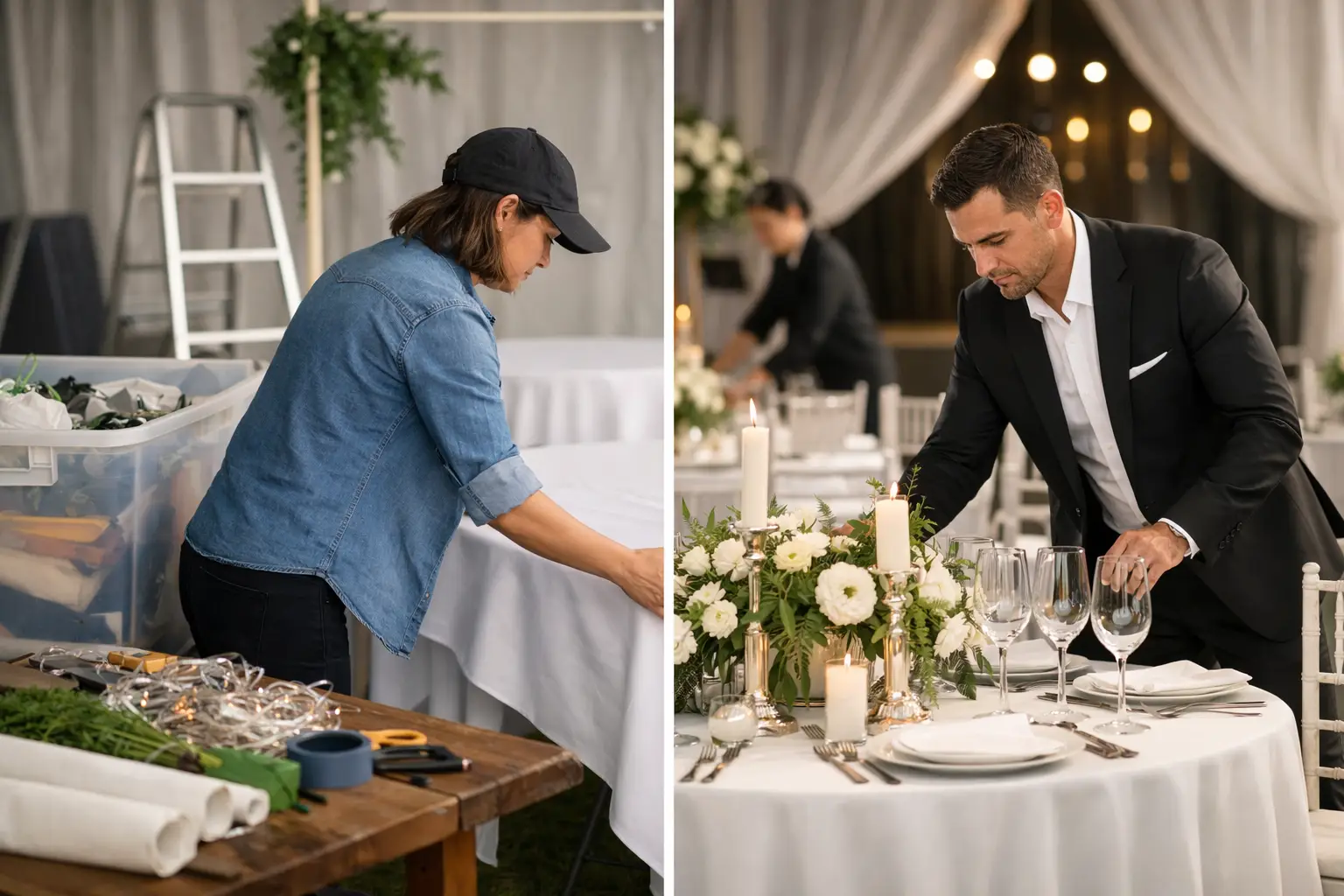
A backyard can look deceptively simple at 10 am. By 4 pm, it may need a marquee, flooring, 80 chairs, chilled drinks, lighting, power, table settings and a clear path for guests before the first car arrives. That is where the decision between DIY versus managed event setup becomes less about hiring equipment and more about who is responsible for making the whole event work.
For a casual gathering with a few tables and a speaker, DIY can be practical. For weddings, corporate functions, milestone celebrations and larger productions, a managed setup often protects the parts of the day that cannot be repeated: timing, presentation, guest comfort and peace of mind.
DIY Versus Managed Event Setup: What Changes?
DIY event setup means you take delivery or collect the equipment, transport it where required, position it, assemble it, test it, pack it down and arrange its return. You are also the person making decisions when the access gate is narrow, the ground is uneven, the weather changes or the furniture count does not match the final guest list.
Managed setup places those operational details with a professional crew. The process should begin with an itemised quote and a clear briefing, then move through scheduled delivery, on-site installation, final placement, pack-down and collection. You still make the creative decisions, but you are not carrying trestle tables through a side gate in party clothes or troubleshooting festoon lights while guests are arriving.
The difference is not simply convenience. It is accountability. A managed provider coordinates the order of work, brings equipment that is ready for presentation, and works to a delivery window that supports your event schedule.
The Real Cost Is More Than the Hire Rate
DIY can appear cheaper because the initial equipment price may be lower. That saving can be genuine for a small event with easy access, modest quantities and capable helpers. It is worth comparing the complete cost, however, rather than the first number on a quote.
Consider the vehicle you will need. Dining tables, chairs, bars, dance floors and marquees take up more space than most people expect, and a standard car is rarely suitable. A ute, trailer or van hire may be required, along with straps, blankets and enough people to load safely. There is also petrol, parking, travel time and the risk of making multiple trips.
Then consider labour. Asking family or staff to arrive early for setup can affect the mood before a private celebration or pull a corporate team away from guest registration and final event checks. If equipment needs to be returned by a fixed time the next day, someone also needs to be available, sober, organised and ready to do the work.
Managed service is often the clearer value when the event has a firm start time, a premium visual standard or several moving parts. What you approve is what you pay, with delivery, installation and collection clearly defined before the date is locked in.
Time Pressure Is the Deciding Factor for Many Hosts
Events do not run on the time shown on an invitation. A 6 pm function may require access from early morning, vendors arriving through the afternoon and a completed setup well before catering, styling and AV checks begin.
DIY becomes difficult when the setup window is short. Venue access may be limited, lifts may need booking, loading docks may have strict time slots, and residential streets may not allow a trailer to sit outside for long. A large delivery arriving without a plan can quickly create delays for every supplier that follows.
A managed crew works from an agreed schedule and understands the practical sequence. Marquees and structures need to be established before furniture. Flooring and staging may need to be installed before tables are dressed. Lighting and audio-visual equipment require safe positioning and testing before guests enter the space.
For private hosts, this means the hours before the event remain available for getting ready, welcoming caterers or simply taking a breath. For event professionals, it means one accountable supplier can execute the infrastructure without repeated follow-up.
A practical test
Ask yourself one question: if a delivery is delayed, a chair is damaged, rain arrives, or the layout needs to change on the day, who has the time and authority to fix it? If the answer is you, DIY may be adding more responsibility than your event can comfortably carry.
Presentation Is Built During Setup
Premium events do not rely on expensive items alone. They rely on proportion, spacing, clean stock and thoughtful placement. The right number of chairs can still look untidy if aisles are inconsistent. A beautifully styled table loses impact if it is set on uneven ground. Lighting can transform a space, but only when cables, power access and fixture placement have been considered properly.
Managed setup gives you the benefit of crews who handle event equipment every day. They know how to position tables for service flow, allow room around a dance floor, keep entrances clear and create a layout that feels intentional from the first guest arrival.
This matters especially for empty spaces. A backyard, warehouse, paddock or blank venue can become an elegant event environment, but it needs infrastructure before styling can do its job. Marquees, furniture, linen, tableware, lighting, bars and AV all need to work as one environment, not as separate hire items placed wherever they fit.
Safety and Site Conditions Are Not Minor Details
Every event site has constraints. There may be stairs, narrow access, soft grass, sloping ground, low tree branches, limited power or a long carry from the vehicle to the setup area. These conditions affect what can be delivered, where it can be installed and how safely guests can move through the space.
DIY is most suitable when the site is straightforward and the equipment is simple. A few cocktail tables on a level patio are very different from a 200-guest marquee event with flooring, power distribution, lighting and a dance floor.
With a managed setup, the event plan can account for site access and practical requirements early. This reduces last-minute compromises such as moving a bar after it has been stocked, shifting tables because catering needs more room, or discovering that the chosen layout blocks the only guest entrance.
It also protects the guest experience. Clear walkways, stable furniture, suitable lighting and sensible cable management are the details people may not consciously notice, but they feel them throughout the event.
When DIY Is the Right Choice
DIY is not the wrong choice. It can work well for a small birthday lunch, casual garden gathering or simple community function where the guest count is modest, access is easy and the host has reliable help.
It is particularly sensible when your hire list is limited, the event timing is flexible and you are comfortable transporting and arranging equipment yourself. If the setup is uncomplicated, the cost saving may be worthwhile.
The key is to be realistic about your capacity. Do not plan a DIY setup based on the best-case scenario of everyone arriving early, the weather staying perfect and every item fitting into one vehicle. Build in time, labour and a backup plan.
When Managed Setup Is Worth It
Managed service earns its place when the stakes are higher. That may mean a wedding ceremony with no second chance, a corporate gala with executive guests, a 500-person production, or a milestone birthday where you want to host rather than work.
It is also valuable when several suppliers need to coordinate. Caterers, florists, photographers, entertainers and venue teams all depend on the event environment being ready at the right time. A dedicated consultant and professional installation crew create a clearer chain of communication from quote to collection.
Zero Three Party Hire provides this level of support across furniture, marquees, lighting, AV, tableware, dance floors and event structures, allowing hosts and planners to consolidate major event infrastructure with one accountable team. On-time delivery is not a nice extra when guests, suppliers and schedules are waiting. It is part of the event plan.
Choose the Setup That Lets You Be Present
The best option depends on the scale of your event, the site, your budget and how much responsibility you want to hold on the day. DIY can suit a simple event with room for flexibility. Managed setup is designed for occasions where timing, finish and reliable execution are non-negotiable.
Before you lock in your hire list, picture the final two hours before guests arrive. Choose the setup approach that leaves you checking the finishing touches, not chasing chairs, lifting tables or solving problems at the gate. That is how an event feels controlled before it feels memorable.