
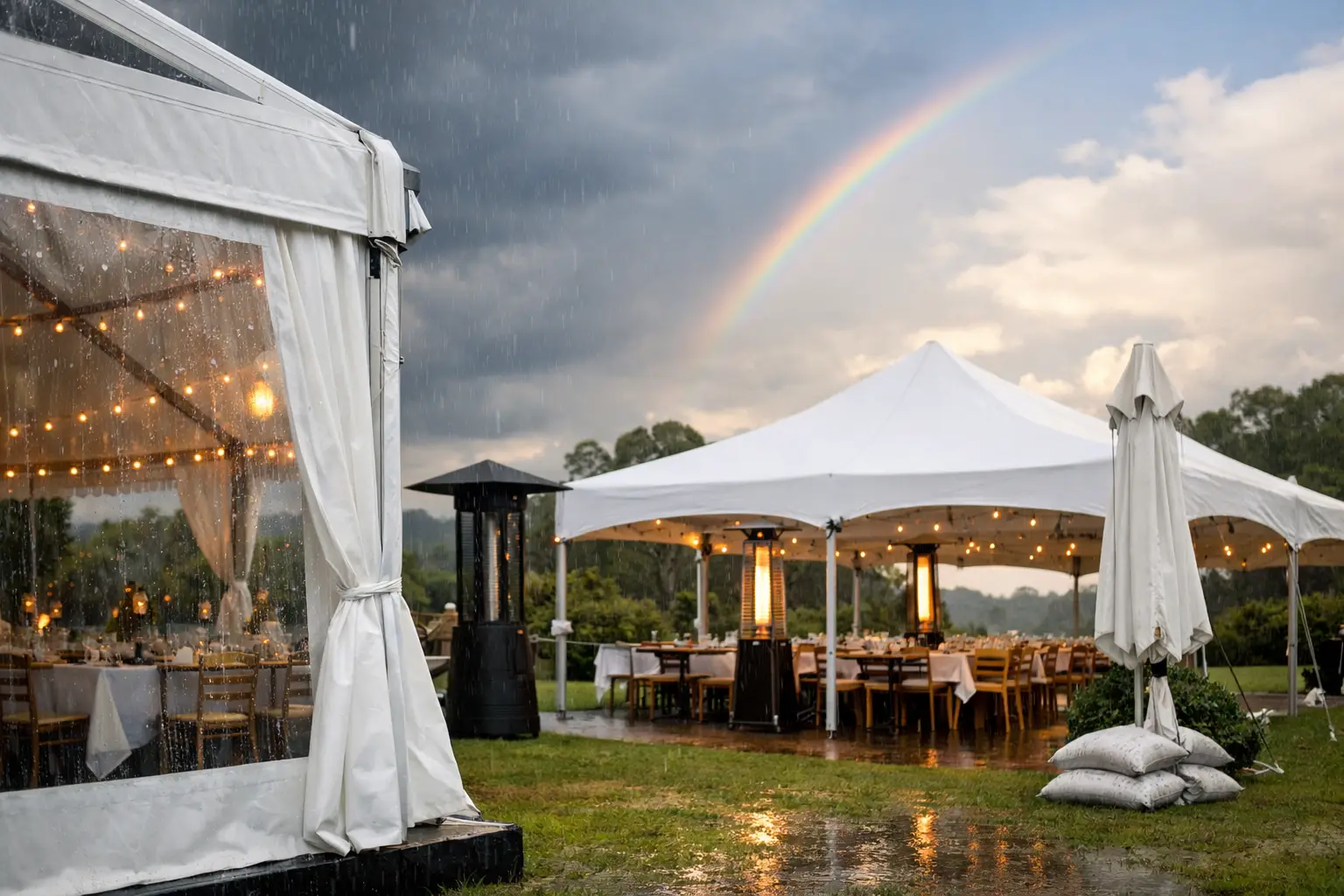
A beautiful outdoor event can change quickly when a cool change arrives, rain starts moving sideways or the afternoon sun becomes too much for guests. Knowing how to weatherproof outdoor events is not about trying to control the forecast. It is about building a plan that keeps people comfortable, protects the setup and allows the occasion to continue with confidence.
For a backyard wedding, corporate function, festival-style activation or milestone celebration, weather planning should happen alongside your guest list and run sheet. The best result is an event space that still looks considered, feels welcoming and operates safely when conditions are less than perfect.
Start with the site, not the styling
Every weather plan begins with a proper look at the location. A level lawn, courtyard or open paddock may look ideal in photos, but each creates different risks once weather moves in. Check the ground condition, drainage, access points, nearby trees, prevailing wind direction and whether vehicles can enter without damaging the surface.
Rainwater needs somewhere to go. If a marquee is installed on low ground or beside a blocked drain, even a light shower can create muddy paths and pooling around entrances. On grass, allow for flooring, matting or clearly defined walkways so guests are not stepping from the bar to the bathroom through wet ground.
Wind needs just as much attention. Coastal sites, rooftops, open acreage and exposed venues can experience strong gusts even on otherwise clear days. Your marquee, umbrellas, signage, flower arrangements, menus and lightweight furniture all need to be selected and secured for the conditions. Never treat weights, tie-downs and correct installation as optional extras.
It also pays to inspect site access well before event day. A narrow side gate, steep driveway, soft lawn or restricted loading zone can affect what equipment can be delivered and where it can safely be installed. Planning this early avoids last-minute compromises.
How to weatherproof outdoor events for rain
Rain protection should cover more than the guest seating area. People need dry routes from arrival to welcome drinks, dining, bathrooms, the bar and transport at the end of the night. A covered marquee is the centrepiece of a wet-weather setup, but sidewalls, flooring and a thoughtful layout are what turn it into a genuinely comfortable event environment.
Choose coverage that suits the event format
A simple canopy can work for a short daytime gathering with a small guest count. For a seated dinner, wedding reception or formal corporate event, consider a fully structured marquee with enough room for tables, chairs, service areas and guest movement without everyone crowding around the edges.
The key trade-off is between openness and protection. Open-sided marquees preserve garden views and airflow on a pleasant day, while clear or solid sidewalls provide better shelter during rain and wind. A flexible sidewall plan often gives you the best of both: the space can be open when conditions allow, then enclosed quickly if the weather turns.
Allow additional covered space for areas that can become bottlenecks. The bar, catering point, entry, cloak area and dance floor all need protection. If guests have to queue in the rain for a drink or walk across soggy ground to use the amenities, the event will feel less polished no matter how well the tables are styled.
Protect the floor and power
Wet ground is uncomfortable underfoot and can make furniture unstable. Depending on the site, temporary flooring, matting or a raised surface may be appropriate, particularly for dining areas, dance floors and high-traffic pathways. This is also helpful after rain, when lawns can remain soft for hours or days.
Electrical equipment must be planned carefully. Lighting, speakers, DJ equipment, catering equipment and power leads need suitable weather protection, safe cable management and placement away from standing water. Keep power distribution out of walkways where possible and make sure guests cannot trip over cables when visibility drops later in the evening.
Plan for wind without closing in the event
Wind is often the condition hosts underestimate. It can make a warm day feel cold, disrupt place settings and turn an unweighted sign into a safety issue. It can also affect the safe operation of umbrellas and temporary structures.
Use solid, properly installed event structures rather than relying on lightweight pop-up shelters for important occasions. Position the marquee entrance away from the strongest wind direction where possible, and use sidewalls strategically to block gusts while retaining views and ventilation elsewhere.
For dining tables, avoid loose paper menus, tall taper candles and unstable centrepieces in exposed areas. Low floral arrangements, weighted table numbers and enclosed lighting options are usually more reliable. If there is a stage, screen or audio-visual setup, the production team should assess wind exposure before installation, not once guests have arrived.
Furniture placement can also create shelter. Lounge settings, bars and feature walls can help define protected zones, provided they do not block exits or create congestion. The goal is not to fill the marquee with equipment. It is to create a layout that keeps traffic flowing and gives guests somewhere pleasant to settle.
Manage heat, sun and cool evenings
Australian weather can move from bright heat to a chilly evening within the same event. Shade is essential for daytime comfort, especially for ceremonies, long lunches and events where guests are dressed formally. A marquee roof, market umbrellas or a covered lounge area can provide relief, but airflow matters as much as shade.
Do not fully close a marquee on a hot day unless you have appropriate cooling and ventilation. Open sides, fans and well-spaced seating can make a significant difference. Place beverages in shaded, accessible locations and avoid setting up food, florals or technical equipment in direct afternoon sun.
When the temperature drops, sidewalls and heating can extend the event comfortably into the evening. The right heating approach depends on marquee size, ceiling height, ventilation and guest numbers. Heating that is too small will be ineffective, while excessive heaters can create uncomfortable hot spots. It should be planned as part of the full layout, with clear spacing from fabric, furniture and guest pathways.
Lighting also becomes a weather and safety consideration after sunset. A well-lit entry, path to amenities and clearly marked steps help guests move confidently if rain arrives or the ground becomes uneven. Warm ambient lighting can keep the atmosphere relaxed, while practical task lighting is needed around catering, bars and service areas.
Build a weather plan into the run sheet
The most reliable events do not leave weather decisions to the final hour. Set clear checkpoints in the lead-up, such as one week out, 72 hours out and the morning of the event. At each point, confirm the forecast, ground conditions and whether the agreed wet-weather setup needs to be activated.
Your suppliers, venue contact and key event team should know who has authority to make a call. For example, decide in advance when sidewalls will be fitted, whether an outdoor ceremony moves under cover and how guests will be directed if the plan changes. Clear decisions prevent mixed messages and rushed adjustments.
Keep guest communication simple. If umbrellas are useful for arrival, provide them or let guests know before the day. If footwear may be affected by grass or gravel, a brief note on the invitation can help. For larger functions, professional signage and a well-briefed arrival team will make a changed layout feel intentional rather than reactive.
Work with an event partner who plans the details
Weatherproofing works best when the marquee, furniture, flooring, lighting and technical equipment are planned together. Separate suppliers can each provide their component, but someone still needs to make sure the entry aligns with the walkway, the flooring suits the marquee dimensions and the power plan supports the event safely.
Zero Three Party Hire can coordinate those major infrastructure details through one managed hire plan, from itemised quoting and site-aware recommendations through to delivery, installation and pack-down. That gives hosts and event teams a clearer point of contact when conditions change and timing matters.
A weather-ready event is not one that looks like a backup plan. It is one where guests can enjoy the occasion without noticing the operational work happening around them. Build in shelter, comfort and a clear decision process early, and you can welcome whatever the Australian forecast brings with far less stress.