
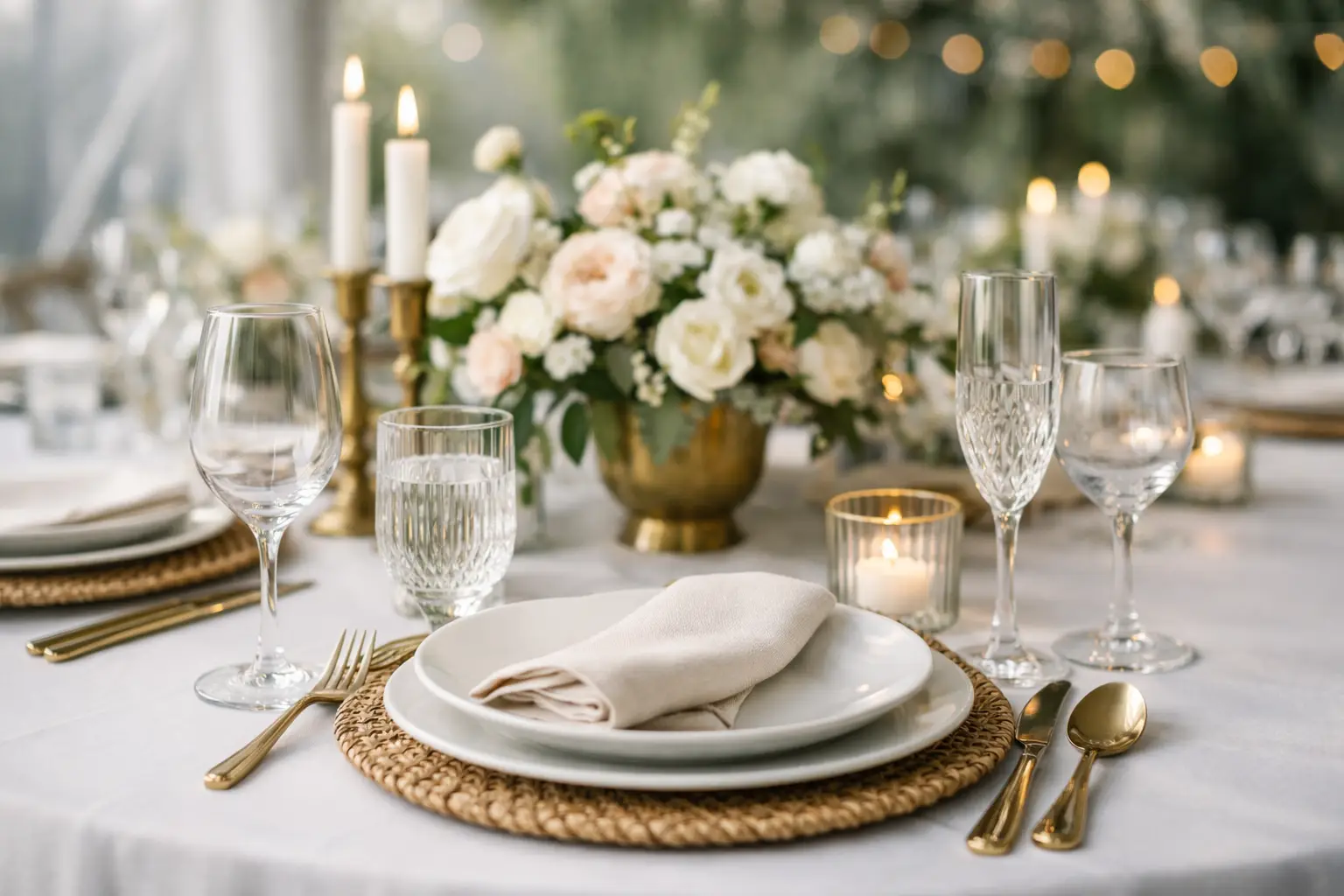
The quickest way to make a reception look underdone is not the flowers or the menu. It is a table set with mismatched glassware, too few side plates, or cutlery that arrives in boxes with no clear plan for placement. Well-planned wedding tableware hire packages keep the visual details aligned with the service your guests will experience, while removing a major packing, washing and transport job from your week.
For an Australian wedding, the right package is not simply a per-person bundle. It should reflect your menu, venue access, table layout, guest count and level of formality, then arrive clean, complete and ready for a considered setup. That is where good planning makes the difference between a beautiful tablescape and a last-minute scramble.
What Wedding Tableware Hire Packages Should Include
A practical package starts with the meal service. For a formal plated dinner, this commonly means a dinner plate, entrée plate, dessert bowl or plate, full cutlery setting and glassware for water, wine and sparkling. A cocktail-style wedding needs a different approach, usually with smaller plates, cocktail napkins, suitable glassware and enough service pieces to support the caterer’s flow.
The inclusions should never be assumed. Ask whether the quoted quantity covers every guest, whether there is an allowance for breakages, and which pieces are included for the bridal table, cake service and supplier meals. If you are serving shared platters, add serving utensils and plates sized for the menu. If coffee is being served after dessert, cups, saucers and teaspoons need to be accounted for rather than added as an afterthought.
The most useful wedding tableware hire packages clearly separate essential place settings from optional styling upgrades. That lets you protect the budget for the items guests genuinely use, then add coloured glassware, charger plates, linen napkins or statement pieces where they will have the most impact.
Match the package to your catering format
Your caterer’s service style should lead the tableware brief. A plated three-course meal requires a more structured place setting than a buffet, while a share-style feast needs room for dishes in the centre of the table. Long banquet tables can look generous with layered settings, but they can become crowded quickly once food, wine bottles, candles and florals are added.
For a buffet or grazing-style reception, guests may need to collect clean plates more than once. Ordering one setting per person can be too tight, particularly if dessert is served separately. Conversely, a cocktail wedding does not necessarily require a full dinner setting for every guest. A good supplier will help you avoid paying for pieces that will stay in their crates, without leaving the caterer short during service.
Choose a Look That Supports the Whole Reception
Tableware should work with the room, not compete with it. Crisp white porcelain and polished cutlery suit almost any setting, from a marquee on a private property to a formal venue dining room. They are also the safest option when your florals, linen or stationery carry the colour.
If you want a more editorial finish, introduce contrast with black or coloured plates, textured glassware, gold-toned cutlery or charger plates. These details can look exceptional in the right lighting, but they need restraint. A coloured plate, bold napkin and tinted glass can easily fight with a patterned linen or abundant centrepiece.
Consider what guests will see under reception lighting. Clear glassware catches candlelight beautifully, while coloured glass can add depth to daylight tables. Metallic cutlery is effective for evening events, though it should be immaculate and consistent across every setting. Premium presentation depends on condition as much as style. Chips, water marks and scratched pieces are not minor details when they are repeated across 150 place settings.
Do not forget the tables beneath the settings
A complete reception setup includes more than plates and glasses. Table shape, size and height affect how the tableware sits, how staff move through the room and how comfortably guests dine. Round tables suit conversation and traditional banquet service, while trestle tables create a communal look that works well for long shared meals.
Allow enough room for each guest, particularly where chargers, multiple wine glasses and generous florals are planned. Your venue may look capable of holding another table on paper, but tight chair spacing and narrow service aisles change the guest experience. It is worth confirming a layout before the final quantity is locked in.
Quantities: Plan for the Real Guest Count
Final guest numbers are rarely fixed months out from a wedding. Build a package around your expected attendance, then set a date for confirming final quantities once RSVP responses are in. This gives you flexibility while allowing stock to be reserved early, especially during spring and autumn wedding periods.
A small buffer is sensible for glassware, napkins and high-turnover service items. The right amount depends on the format. A summer wedding with a long drinks reception may require extra water and wine glasses, while a seated winter dinner may need more coffee service than you expect. Your caterer can provide valuable guidance here because they understand how quickly each item will move during the event.
Do not overlook children, vendors and dietary service. Children may need smaller settings or more durable options. Photographers, musicians and other suppliers may be catered for separately, but still require plates, cutlery and glassware. Dietary meals can need discreet markers or different bowls and plates to ensure service stays accurate.
Delivery, Setup and Collection Are Part of the Package
Tableware is only easy to hire when the operational details are clear. Before confirming, establish where the equipment will be delivered, whether it will be taken directly into the venue or marquee, and who is responsible for unpacking and setting each place. At a home wedding, access can involve gravel driveways, stairs, tight gates or a long walk from the truck. These details affect crew time and should be included in the plan from the start.
Ask what condition the items need to be in for collection. Most hire arrangements do not require you to wash every piece, but food scraps should be removed and items returned safely to the designated crates or racks. Confirm this in writing, along with the process for damaged or missing items. Clear instructions protect both your bond and the collection crew.
For a larger wedding, having one supplier manage tables, chairs, linen, tableware and key event infrastructure reduces handovers on delivery day. Zero Three Party Hire can coordinate those moving parts through a dedicated consultant, with itemised quoting and a delivery, setup and collection plan that matches the event schedule.
Questions Worth Asking Before You Book
The best quote is not always the lowest line-item total. It is the quote that tells you exactly what will arrive, when it will arrive and what happens if the plan changes. Before you approve a package, clarify four areas:
- Are all plates, cutlery pieces, glassware and service items listed individually or clearly grouped by setting?
- Is delivery, placement, setup assistance and collection included, and are there access or after-hours charges?
- What is the final date for guest-count changes, and what happens if you need additional items close to the wedding?
- How are breakages, missing pieces and unwashed returns handled?
These questions are not about expecting problems. They are how you create a calm, accountable plan before the day becomes busy.
When a Package Is Better Than Hiring Piece by Piece
Packages are particularly useful when you want a cohesive look and a faster decision process. They remove the need to compare every fork, plate and wine glass individually, and they make it easier to estimate a per-guest cost. For couples planning a first-time backyard or marquee wedding, that guidance can be invaluable.
Item-by-item hiring may be the better choice if you already have a clear styling concept, are mixing hired pieces with venue stock, or need specialist items for a non-standard menu. There is no single correct route. The key is to make sure each item has a role in service or styling, and that the package still works once the caterer, florist and venue requirements are all considered.
A polished reception is built from details guests may not consciously notice: the correct glass in hand at speeches, enough room for dinner, clean settings placed exactly where they should be. Start your tableware plan early, confirm the service format, then secure a quote with every inclusion and delivery detail clear. That leaves more room on the wedding day for the reason everyone is gathered around the table.