A 500-guest gala, festival precinct or marquee wedding can look effortless when doors open. Behind that result is a detailed plan for access, equipment quantities, site conditions, power, delivery timing and crew movements. Large scale event hire is not simply about ordering more chairs. It is about making every essential element arrive in the right condition, be installed in the right place and be ready before the first guest arrives.
For private hosts, agencies, venue teams and production managers, the operational risk rises quickly with guest numbers. A missing bar, under-sized generator connection, delayed marquee installation or a delivery vehicle that cannot access the site can affect the entire event. The right hire partner brings order to those moving parts, so your team can focus on guests, programme and presentation.
What large scale event hire should cover
At scale, individual hire items need to work as one complete environment. Guests do not experience tables, lighting and flooring as separate orders. They experience the welcome, the comfort of the seating, the flow between spaces and the overall finish of the event.
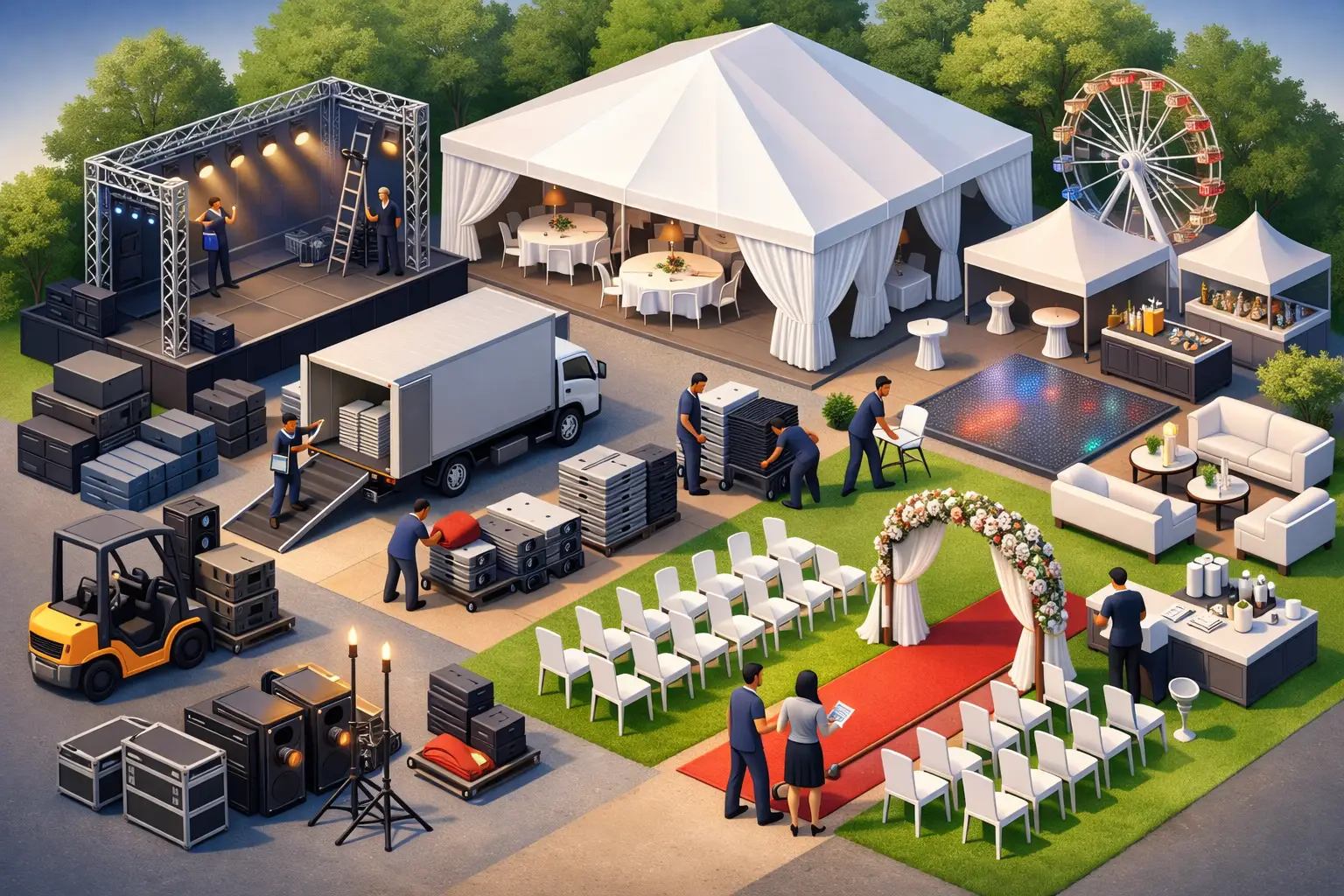
A properly scoped hire plan may include guest furniture, cocktail furniture, dining tables, chairs, linen, tableware, bars, refrigeration, staging, dance floors, lighting, audio-visual equipment, marquees and event structures. The exact mix depends on the format. A corporate conference requires clear sightlines, staging and dependable AV. A wedding may need a weather-ready ceremony space, dining layout, feature lighting and a dance floor that supports the evening programme. A large backyard celebration may require the same level of infrastructure as a venue event, with additional attention to ground conditions and power.
The key is not to treat these decisions in isolation. Your bar placement affects queue flow. Your marquee size affects lighting, flooring, furniture spacing and service access. Your stage position affects guest seating and speaker visibility. Planning these elements together prevents expensive revisions later.
Start with the site, not the catalogue
The most useful first step is a practical site assessment. Before choosing a furniture style or approving a floor plan, confirm where vehicles can enter, where equipment can be unloaded and whether the crew has a clear route to the installation area.
Ask how wide gates and driveways are, whether there are stairs, steep grades, soft grass or tight turns, and what time delivery vehicles can legally access the venue. In city locations, loading docks, lifts, parking permits and booked delivery windows can determine the entire run sheet. For regional properties, the questions may be about unsealed roads, wet-weather access and the distance between the truck and the event area.
Power, amenities and weather protection also need early attention. A beautiful marquee does not solve every weather issue unless flooring, sidewalls, drainage and entry points have been considered. Likewise, lighting and AV equipment need suitable power distribution, safe cable management and enough capacity for the full load. These details are less visible in the final photos, but they are what make the event feel controlled on the day.
Build a guest experience around real numbers
Guest count is the foundation of large scale event hire, but it should not be the only number used. Confirm expected attendance, peak occupancy, staff numbers, suppliers, performers and any separate VIP or backstage areas. A 500-person event with a seated dinner has very different requirements from a 500-person cocktail function with staggered arrivals.
Allow enough space for service and movement, not just enough seats. Dining layouts need room for chairs to be pulled out, waitstaff to pass and guests to reach amenities without crossing a service route. Cocktail layouts need practical landing spaces for drinks and food, particularly around bars and catering stations. If guests are expected to stand for long periods, a mix of lounges, high bars and casual seating helps people settle in rather than congregate in one area.
There is always a balance between capacity and comfort. Packing more guests into a marquee may reduce the required footprint, but it can compromise table service, sightlines and the premium feel of the occasion. A clear layout often delivers more value than simply increasing equipment quantities.
Plan for the event’s busy moments
Most events have pressure points: arrivals, the first drinks service, the transition into dinner, speeches and the move to the dance floor. Design the hire layout around those moments.
For example, a bar positioned away from the entry can stop arriving guests blocking the doorway. A separate water station can reduce bar queues. Staging and screens should be visible from every main seating zone, while dance floor access needs to remain clear even when tables are occupied. These decisions make the event easier to run without drawing attention to the logistics.
Why one accountable supplier matters
Multiple suppliers can work well when the production team has the time and experience to coordinate every handover. However, each additional provider creates more delivery windows, contact points and opportunities for conflicting assumptions about access, installation order or collection.
A single large-event hire team can coordinate the major physical elements under one scope. That means furniture, marquee infrastructure, flooring, lighting and event equipment are planned against the same site map and delivery schedule. If the floor plan changes, there is one consultant who understands how that adjustment affects the complete setup.
Zero Three Party Hire supports this process with a dedicated event consultant, itemised quoting, professional delivery, on-site installation, briefing, pack-down and collection. You know what is included before confirmation, who is responsible for the details and when each stage will happen. What you approve is what you pay.
This approach is particularly valuable when installation must happen across several days or within a short venue access window. The crew can establish the structure first, then flooring, furniture, lighting and finishing details in the correct sequence. It is calmer for the client and safer for everyone working on site.
Confirm the quote before you lock in the date
A quote for a large event should do more than show a list of products. It should clearly identify equipment quantities, delivery and collection arrangements, installation requirements, site-specific allowances and any exclusions. If an item is optional, temporary or subject to site inspection, that should be clear before you commit.
Check whether the quote accounts for after-hours access, stairs, long carry distances, difficult ground, interstate transport or split deliveries. These are not reasons to avoid ambitious event locations. They are factors that need to be planned accurately from the start.
It is also worth confirming lead times early. Peak wedding periods, major sporting weekends, end-of-year corporate functions and large public events can place pressure on marquee stock, premium furniture ranges and technical equipment. Booking early gives you the best chance of securing the items that define the look and function of your event.
Keep the event-day handover simple
Once the plan is confirmed, create a clear point of contact for the install and event day. That person should have site access details, venue contacts, bump-in times, approved floor plans and authority to resolve small placement decisions. For a complex production, the hire team should also know the schedule for caterers, stylists, AV operators and other suppliers whose work overlaps with the setup.
Before guests arrive, walk through the space with the event lead. Check table counts, chair placement, bar setup, stage position, lighting operation, cable protection and emergency access. This is the moment to identify a missed detail while crew and equipment are still on site, rather than after the room is full.
After the event, planned pack-down matters just as much. Guests should be able to leave safely, venue conditions should be respected and collection should happen at the agreed time. A professional crew leaves the site organised, not as another task for the host or venue team.
Questions worth asking before booking
For large events, ask whether the supplier can support your full guest count, inspect or assess the site, coordinate installation with your venue schedule and provide a named contact from quote through to collection. Confirm the condition standard of the equipment, what happens if weather changes the plan and how adjustments are handled before the event.
You should also ask what the crew needs from you on the day. Clear access, approved placement areas, contact details and realistic timing are usually the difference between a smooth bump-in and unnecessary delays. Good planning is shared planning.
The best large events do not feel over-managed to guests. They feel generous, polished and easy to move through. Start with a well-considered site plan, choose equipment that supports the experience you want to create, and put the operational details in the hands of a team that treats your event date as non-negotiable.