
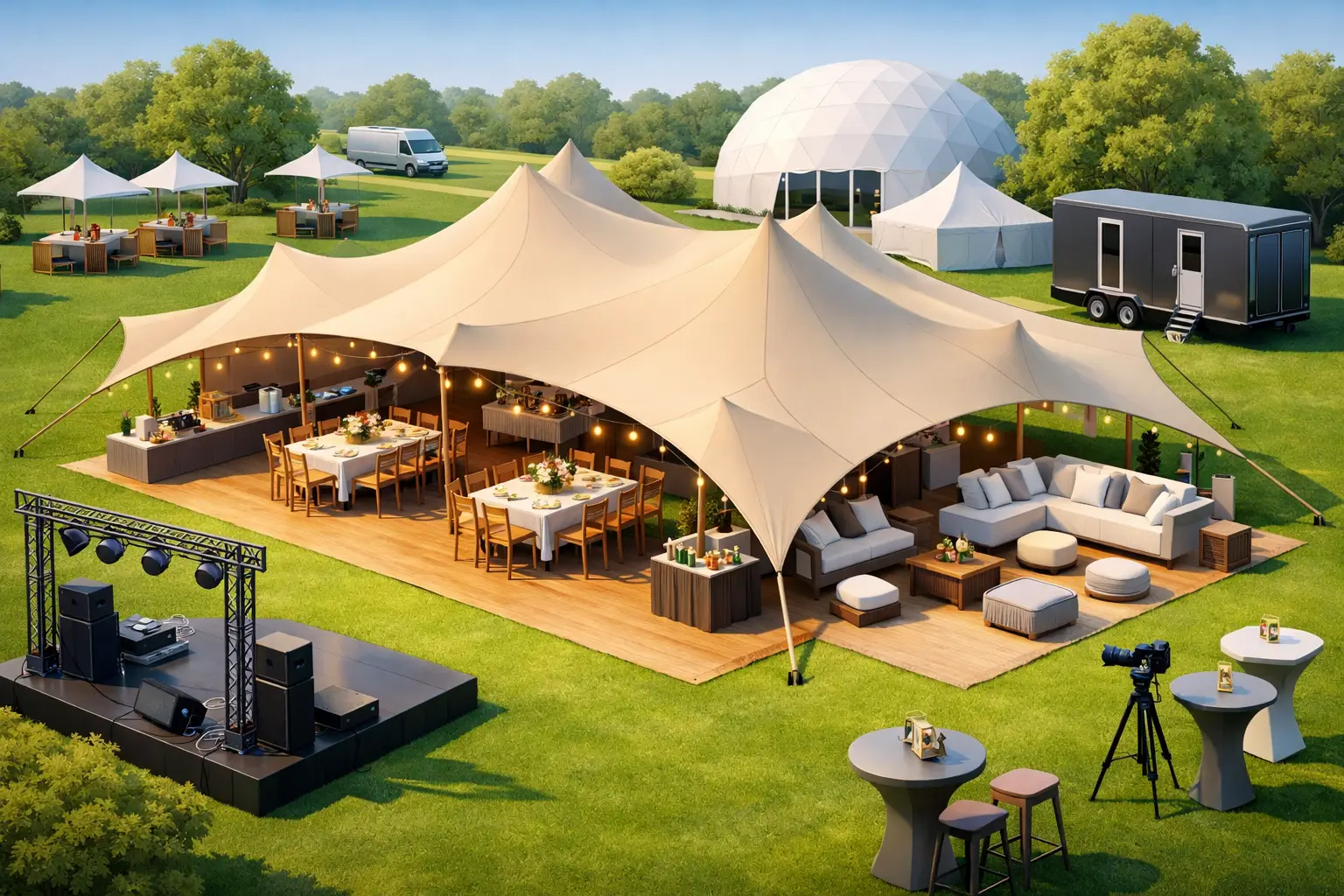
A beautiful outdoor event can unravel quickly when the cover is an afterthought. Stretch tent hire gives you more than shelter: it creates a defined entertaining space, protects the flow of the day and gives a backyard, winery lawn or production site a considered finish. The difference comes down to planning the tent around the site, guest movement and the conditions you may need to manage.
Why stretch tents suit Australian events
Stretch tents have a softer, more architectural look than a conventional marquee. Their tensioned fabric can be rigged in varied configurations, creating high peaks, curved lines and open edges that feel connected to the landscape rather than sitting heavily on it. For weddings, long lunches, cocktail parties, launches and festival-style corporate events, that flexibility can make a practical structure feel like part of the styling.
They are especially useful where you want guests to enjoy the outdoors without being fully exposed to direct sun, light rain or evening dew. Open-sided configurations allow air to move through the event space, while lower or more enclosed set-ups can offer greater weather protection. The right approach depends on the season, location and whether guests will be seated for a formal meal or moving through a cocktail-style event.
A stretch tent is not automatically the right answer for every site. If complete enclosure, strong climate control or a highly controlled formal interior is essential, a framed marquee may be the better fit. A professional site assessment makes that decision clearer before the event design is locked in.
Start with the event, not the tent size
Tent dimensions should follow the way guests will use the space. A guest count alone does not tell the full story. One hundred guests at a standing drinks function need a very different footprint from one hundred guests seated at round tables with a bar, buffet, dance floor and band.
Think through the event in moments. Where will guests arrive? Is there a sheltered point for greetings and drinks? Will dining happen under the tent, nearby or in a separate structure? Where do speeches take place, and will guests need to move through the tent to reach amenities, the bar or the dance floor?
For seated events, allow room for chairs to move comfortably, waitstaff to circulate and guests to reach their table without squeezing past furniture. For cocktail events, plan clear paths around food stations, lounges and bars rather than filling every available metre with guests. The most successful layouts retain open space. It helps the event feel generous, looks better in photographs and gives your crew room to work.
Your tent may also need to accommodate equipment that is easy to overlook at the early quoting stage: an AV station, speaker placement, a cake table, gift table, catering access, heater clearances or a stage. Include these items from the outset to avoid a late change that compromises the layout.
Stretch tent hire begins with a proper site check
A stretch tent needs suitable anchor points and clear access for safe installation. That is why site information matters as much as the event date. A flat grassed area is often ideal, but sloping lawns, uneven ground, paved courtyards and confined urban spaces can all be workable with the right plan.
Before confirming your hire, identify the usable area rather than measuring the whole block or venue lawn. Account for garden beds, pools, trees, power poles, overhead lines, fences and existing structures. The tent footprint is only part of the requirement. Installation crew need room to work, and guests need safe entry and exit around the structure.
Access is equally important. Can a vehicle reach the installation point? Is there a narrow side passage, stairs, a steep driveway or a long distance from unloading to the event area? In city locations, loading zones and building access times can affect the delivery plan. At regional properties, soft ground and weather conditions may influence where vehicles can travel.
Clear site photos, approximate measurements and a quick description of access give your event consultant a stronger starting point. For complex locations, an on-site inspection is the most reliable way to confirm the configuration, anchoring method and installation timing.
What about paving and underground services?
Never assume that stakes can be driven into any lawn or surface. Underground irrigation, electrical cables, plumbing and other services must be identified before installation. On hard surfaces or sensitive grounds, alternative anchoring methods may be required. These methods can affect space, cost and the final tent shape, so they should be discussed before final approval.
Plan for weather without losing the outdoor feel
Australian weather can change quickly, even on a forecast that looked settled a week earlier. A stretch tent provides valuable cover, but it works best as part of a broader weather plan. Consider the direction of afternoon sun, prevailing wind, exposed sides of the site and where rainwater will run if conditions turn wet.
For summer events, shade and airflow are usually the priority. An open-sided configuration can feel cooler and more inviting than a fully enclosed structure, particularly when paired with well-placed fans, chilled drinks service and lounge areas away from direct sun. For autumn or winter celebrations, side protection, heaters and a more compact seating plan may be appropriate.
Rain management deserves specific attention. Depending on the tent configuration, gutters or linked structures may be needed to manage water between covered areas. Keep catering, electrical connections and guest pathways away from likely run-off points. If the event includes a ceremony, have a clear decision point for whether it remains outdoors or moves under cover.
The goal is not to turn every event into a worst-case scenario. It is to have a practical response ready so you can keep hosting rather than making last-minute calls under pressure.
Build the tent into one complete event design
The tent is the frame, but furniture, lighting and flooring are what turn it into a polished event environment. A dining layout may call for timber tables, quality chairs, tableware and warm overhead lighting. A cocktail event may work better with bars, dry bars, lounges, market lighting and a dedicated dance area.
Lighting should be planned for function as well as atmosphere. Guests need to see pathways, food stations, steps and amenities after dark. Warm festoon lighting can define the tent canopy, while practical lighting around service areas supports staff and keeps the event running safely. If speeches, presentations or entertainment are on the run sheet, allow for suitable audio-visual equipment and power planning from the beginning.
Flooring is another decision that depends on the site and event style. Lawn can suit a relaxed celebration, but a dance floor creates a stable performance area and helps keep footwear cleaner after rain. For formal events or uneven ground, additional flooring options may improve guest comfort and presentation. There is no one-size-fits-all package: the best result is the one that suits your guest experience and site conditions.
Give installation the time it needs
A stretch tent is not a last-minute delivery item. Installation involves equipment placement, rigging, tensioning and safety checks, followed by furniture, lighting and any other event infrastructure. Larger events, restricted sites and detailed styling all require more lead time.
Where possible, schedule the tent installation before other suppliers arrive. This gives the crew clear access and prevents furniture, florals or catering equipment being moved unnecessarily. It also allows time to inspect the structure, test lighting and confirm the layout before the final event set-up begins.
At pack-down, the same principle applies. Plan collection around venue requirements, guest departure times and any noise or access restrictions. A managed hire service should make these details clear in the quote and confirmation process, including what is being supplied, delivery windows, installation inclusions and collection arrangements. What you approve should be what you pay, with no uncertainty about the operational basics.
Questions to ask before you lock in a tent
Before confirming stretch tent hire, ask whether the proposed size suits your final layout, not simply your guest count. Confirm the anchoring method, site access requirements and whether a site visit is recommended. Ask what weather measures are included or available, how lighting and power will be coordinated, and when installation and collection will occur.
It is also worth confirming who is responsible for permits, venue approvals and underground service information. For public spaces, commercial sites and some private properties, these requirements can take time. Addressing them early protects your event date and prevents costly changes later.
Zero Three Party Hire can coordinate the tent alongside furniture, lighting, tableware, flooring and event equipment, giving you one accountable team for the major infrastructure rather than a chain of separate suppliers to manage.
Make the structure work quietly in the background
The best stretch tent does not compete with the occasion. It makes guests comfortable, supports the schedule and gives every part of the event a place to happen, whether the afternoon is bright, the evening turns cool or the weather changes its mind. Start with a site plan and a realistic event layout, then build the cover, furniture and operational details around the experience you want guests to remember.